
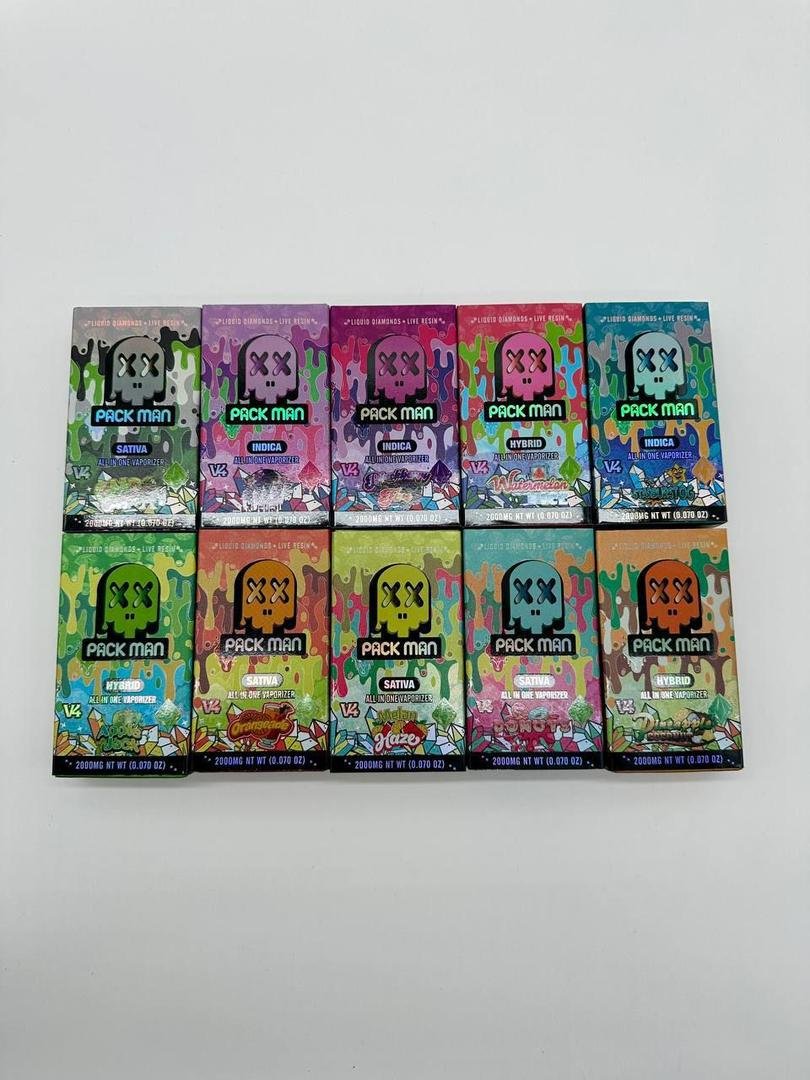


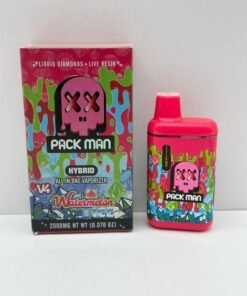

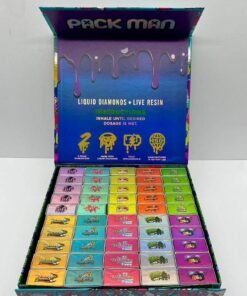
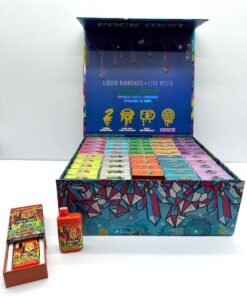
PACK MAN V4 2G DISPOSABLE LIQUID DIAMOND + LIVE RESIN 2000MG
Price range: $30.00 through $1,500.00
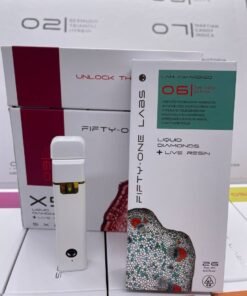
Elevate your vaping experience with the Pack Man V4 2G Disposable – Liquid Diamond + Live Resin 2000mg, a cutting-edge device engineered for potency, flavor, and reliability. Combining the crystalline strength of Liquid Diamonds with the aromatic complexity of Live Resin, the V4 delivers a premium, full-spectrum cannabis experience in a portable, convenient disposable format.
packman v4 2g disposable
PACK MAN V4 2G DISPOSABLE LIQUID DIAMOND + LIVE RESIN 2000MG
Product Overview
PACK MAN V4 2G DISPOSABLE LIQUID DIAMOND + LIVE RESIN 2000MG is a disposable vaporization device that is designed to contain a pre-filled concentrate formulation commonly described as liquid diamond and live resin. The device is manufactured as an all-in-one unit that combines a battery system, heating element, reservoir, and mouthpiece within a compact housing.
Furthermore, the integrated design is intended to eliminate the need for separate filling procedures or component assembly. Consequently, all primary operational components are contained within a single device structure.
Key Product Characteristics
Device Features
- Integrated disposable design
- Pre-filled concentrate reservoir
- Rechargeable battery system (if applicable)
- Compact and portable construction
- Draw-activated operation
- All-in-one housing design
- Pre-assembled internal components
Concentrate Information
The formulation is described by the manufacturer as containing liquid diamond and live resin concentrate components. Additionally, concentrate composition, cannabinoid content, and ingredient information may vary according to manufacturing specifications and regional compliance requirements.
Device Construction
Battery System
A rechargeable or pre-charged battery provides power to the heating element. As a result, concentrate material can be vaporized during operation.
Heating Element
An internal heating component is utilized to convert concentrate into an inhalable aerosol. Furthermore, heating efficiency may be influenced by battery condition, device design, and environmental factors.
Reservoir
The internal reservoir stores concentrate material until it is delivered to the heating element through the device’s internal system.
Storage Information
To maintain product condition, the following storage practices are generally recommended:
- Store in a cool, dry location.
- Avoid prolonged exposure to direct sunlight.
- Protect from excessive heat.
- Keep away from moisture.
- Store securely away from children and pets.
Safety Considerations
Important Information
- Intended only for adults where legally permitted.
- Keep out of reach of children and pets.
- Follow manufacturer instructions carefully.
- Do not modify or disassemble the device.
- Dispose of the device according to local regulations.
Disposal Guidance
Because electronic components and batteries may be present within the device, disposal requirements may differ from ordinary household waste. Therefore, local electronic waste and battery recycling regulations should be consulted before disposal.
Regulatory Notice
Availability, possession, transportation, and use of products containing cannabis-derived ingredients may be regulated differently depending upon jurisdiction. Consequently, users should review all applicable local laws and regulations before purchasing, possessing, or transporting such products.
PACK MAN V4 2G DISPOSABLE LIQUID DIAMOND + LIVE RESIN 2000MG
Technical Information and Product Component Overview
Understanding Disposable Vaporization Devices
Disposable vaporization devices have been developed to combine several operational components into a single self-contained unit. As a result, separate assembly procedures are generally not required. Furthermore, integrated designs are intended to simplify product handling by incorporating the battery, reservoir, heating element, and airflow system within one housing structure.
In addition, modern disposable devices are frequently manufactured with compact dimensions. Consequently, transportation and storage may be simplified when compared with larger multi-component systems.
Because technological developments have continued to evolve, many contemporary devices incorporate rechargeable batteries, improved airflow pathways, and enhanced power-management systems. Therefore, product designs often differ substantially from earlier generations of disposable vaporization devices.
Internal Component Structure
Battery Technology
The battery functions as the primary power source within the device. During operation, electrical energy is delivered to the heating element. Subsequently, the heating process converts concentrate material into an aerosol.
Battery performance may be influenced by several factors, including:
- Storage temperature
- Charging frequency
- Device age
- Environmental conditions
- Usage patterns
Additionally, rechargeable batteries may undergo performance changes over time as charging cycles accumulate.
Heating System
An internal heating element is incorporated to facilitate vaporization. Furthermore, heating systems are typically engineered to operate within predetermined performance parameters.
Several variables may influence heating performance:
- Power delivery consistency
- Battery condition
- Concentrate viscosity
- Ambient temperature
- Airflow characteristics
Consequently, overall device operation may vary according to environmental and operational conditions.
Airflow Pathway Design
Airflow systems regulate the movement of air through the device during inhalation. Therefore, airflow design may influence draw resistance, aerosol production, and overall operational characteristics.
Manufacturers frequently develop airflow systems to balance:
- Air intake efficiency
- User comfort
- Aerosol consistency
- Internal pressure regulation
- Device responsiveness
Because airflow preferences differ among individuals, product experiences may vary.
Reservoir System
The reservoir serves as the storage chamber for concentrate material. Additionally, internal delivery mechanisms transport concentrate from the reservoir to the heating element during operation.
Reservoir capacity is often a significant factor in determining product longevity. However, actual usage duration may vary according to individual consumption patterns and operational variables.
Concentrate Terminology Overview
Understanding Product Labeling
Product labels often include terminology that reflects manufacturer descriptions of concentrate formulations.
Such terminology may include references to:
- Extract categories
- Concentrate processing methods
- Product composition
- Ingredient classifications
- Manufacturing terminology
Because labeling practices vary among manufacturers, consumers are encouraged to review available product information carefully.
Product Information Transparency
Manufacturers may provide documentation regarding:
- Ingredient information
- Batch identification
- Laboratory testing
- Compliance requirements
- Packaging specifications
Consequently, reviewing available product documentation may contribute to informed decision-making and responsible product handling.
Rechargeable System Considerations
Purpose of Rechargeable Batteries
Rechargeable battery systems are frequently incorporated into higher-capacity disposable devices.
As a result, stored concentrate may be utilized more effectively throughout the product lifecycle.
Rechargeable systems may provide:
- Extended operational duration
- Reduced likelihood of premature battery depletion
- Improved utilization of reservoir contents
- Consistent power delivery
- Additional charging flexibility
Nevertheless, manufacturer instructions should always be followed when charging electronic devices.
Charging Environment Recommendations
Appropriate charging conditions may contribute to maintaining battery performance.
General recommendations often include:
- Charging on stable surfaces
- Avoiding excessive heat
- Protecting charging equipment from damage
- Maintaining dry conditions
- Following manufacturer guidance
Furthermore, charging equipment should be inspected periodically for signs of wear.
Product Handling Information
Routine Handling Practices
Electronic devices may benefit from careful handling throughout their operational lifespan.
Recommended practices often include:
- Protecting against impact damage
- Preventing exposure to excessive moisture
- Maintaining clean storage conditions
- Avoiding unauthorized modifications
- Following manufacturer instructions
Consequently, appropriate handling may contribute to preserving product condition.
Physical Protection Measures
External housing structures are designed to protect internal components. However, physical damage may still affect performance.
Potential risks may include:
- Dropping the device
- Excessive pressure
- Contact with sharp objects
- Exposure to liquids
- Improper storage conditions
Therefore, careful handling remains important.
Environmental Factors
Temperature Effects
Environmental temperatures may influence device operation.
High temperatures may affect:
- Battery efficiency
- Concentrate consistency
- Electronic components
- Storage stability
Similarly, low temperatures may influence battery responsiveness and overall device performance.
Accordingly, moderate storage conditions are generally recommended whenever possible.
Humidity Considerations
Moisture exposure may affect electronic systems.
As a result, excessive humidity should generally be avoided.
Potential concerns may include:
- Condensation accumulation
- Charging port contamination
- Electronic component exposure
- Reduced device reliability
Therefore, dry storage environments may help maintain product condition.
Product Lifecycle Overview
Manufacturing Stage
The manufacturing process typically includes multiple stages.
These stages may involve:
- Component production
- Device assembly
- Functional testing
- Quality inspection
- Packaging verification
Furthermore, manufacturing procedures may vary according to company standards and regulatory requirements.
Distribution Stage
After production, products move through distribution channels before reaching retailers and consumers.
During distribution, products may be subjected to:
- Transportation conditions
- Inventory storage
- Environmental fluctuations
- Handling procedures
Consequently, packaging systems are often designed to provide protection throughout the distribution process.
Consumer Use Stage
Once acquired, consumers assume responsibility for appropriate handling, storage, charging, and disposal practices.
Therefore, manufacturer guidance should be reviewed carefully before operation.
End-of-Life Stage
At the conclusion of the product lifecycle, disposal considerations become increasingly important.
Electronic devices frequently contain materials that may require specialized disposal procedures. Accordingly, local regulations should be consulted before disposal occurs.
Regulatory Awareness
Jurisdictional Differences
Regulatory requirements vary considerably across regions.
Consequently, consumers should familiarize themselves with:
- Local legislation
- Age restrictions
- Possession requirements
- Transportation regulations
- Product compliance standards
Furthermore, regulatory frameworks may change periodically. Therefore, current information should always be reviewed.
Product Compliance
Compliance requirements may address:
- Packaging standards
- Labeling requirements
- Ingredient disclosures
- Testing procedures
- Consumer information obligations
Because requirements differ among jurisdictions, compliance standards may not be identical across all markets.
Frequently Asked Questions
What is the purpose of the integrated design?
The integrated design combines multiple operational components within a single housing. As a result, separate assembly procedures are generally unnecessary.
Why do some disposable devices include rechargeable batteries?
Rechargeable batteries may support extended utilization of available reservoir contents and help maintain operational functionality throughout the product lifespan.
Can environmental conditions affect device operation?
Yes. Temperature, humidity, and storage practices may influence battery performance, concentrate consistency, and overall device operation.
Is maintenance required?
Maintenance requirements are generally limited because components are integrated into a sealed structure. Nevertheless, periodic visual inspection may still be beneficial.
Why is proper disposal important?
Electronic components and batteries may require specialized waste-management procedures. Consequently, responsible disposal practices support environmental and regulatory objectives.
PACK MAN V4 2G DISPOSABLE LIQUID DIAMOND + LIVE RESIN 2000MG incorporates multiple integrated systems within a compact disposable format. Furthermore, battery technology, heating components, airflow pathways, and reservoir systems function together to support device operation. Additionally, storage conditions, environmental factors, charging practices, and regulatory requirements may influence the overall ownership experience. Therefore, manufacturer instructions, local regulations, and responsible disposal practices should be followed throughout the product lifecycle.
PACK MAN V4 2G DISPOSABLE LIQUID DIAMOND + LIVE RESIN 2000MG
Product Design Characteristics and Device Architecture
Overview of Integrated Device Engineering
Modern disposable vaporization devices are commonly designed as self-contained systems. Consequently, multiple operational components are housed within a single enclosure. Furthermore, integrated designs are intended to simplify handling by eliminating the need for external tanks, separate batteries, or user-installed heating components.
Within the PACK MAN V4 2G DISPOSABLE LIQUID DIAMOND + LIVE RESIN 2000MG device category, the internal structure generally consists of several interconnected systems that operate together during use. Therefore, understanding the role of each component may assist consumers in becoming familiar with product functionality and maintenance considerations.
Compact Housing Construction
The exterior housing serves as the primary protective structure for internal components.
Several functions are performed by the housing:
- Protection of electronic components
- Support of structural integrity
- Reduction of exposure to environmental contaminants
- Containment of the concentrate reservoir
- Accommodation of airflow channels
Additionally, housing materials are often selected to balance durability and portability. As a result, devices can frequently be transported and stored with relative convenience. similar to weedmaps, how to rolls cone, how to make badder
Internal System Integration
Unlike modular systems that require assembly, disposable devices typically utilize permanently integrated components.
These components commonly include:
- Battery system
- Heating element
- Airflow pathway
- Reservoir chamber
- Mouthpiece assembly
- Internal circuitry
Because these systems are designed to operate together, unauthorized modification may affect intended functionality.
Airflow System Fundamentals
Purpose of Airflow Design
Airflow systems are essential to device operation. During inhalation, air moves through designated channels before passing the heating area and exiting through the mouthpiece.
Consequently, airflow design may influence:
- Draw resistance
- Aerosol formation
- Device responsiveness
- Internal temperature regulation
- Overall operational consistency
Air Intake Structure
Air intake openings are typically incorporated into the lower or side sections of the device.
These openings allow:
- External air entry
- Pressure regulation
- Internal airflow circulation
- Consistent operation
Furthermore, maintaining unobstructed airflow pathways may contribute to proper device function. weed male or female, weed male or female, what is water hash
Airflow Consistency Considerations
Several factors may influence airflow performance.
Examples include:
- Dust accumulation
- Physical damage
- Environmental debris
- Structural deformation
- Improper storage conditions
Therefore, periodic visual inspection of external airflow openings may be beneficial.
Reservoir and Concentrate Delivery Systems
Reservoir Function
The reservoir functions as the storage area for concentrate material contained within the device.
Additionally, reservoir capacity contributes to product longevity and operational duration.
The reservoir system is generally designed to:
- Store concentrate securely
- Support internal delivery mechanisms
- Reduce leakage potential
- Maintain concentrate availability
- Protect internal components
Delivery Mechanisms
Internal delivery systems transport concentrate from the reservoir to the heating element.
These systems may include:
- Wick structures
- Capillary pathways
- Absorption materials
- Internal transfer components
Consequently, concentrate can be supplied to the heating area during operation.
Operational Variables
Several conditions may influence concentrate movement within the device.
These conditions may include:
- Ambient temperature
- Concentrate viscosity
- Device orientation
- Storage duration
- Environmental exposure
Therefore, performance characteristics may vary under different operating conditions. pink rhino strain, stages of pot plant growth, how many 3.5 in a qp
Understanding Device Longevity
Factors Affecting Operational Duration
The lifespan of a disposable device is influenced by multiple variables.
Among these variables are:
- Frequency of use
- Duration of inhalation
- Battery performance
- Storage practices
- Environmental conditions
Consequently, operational duration may differ significantly among individual users.
Battery Utilization
Rechargeable systems are often incorporated to support continued operation throughout the usable lifespan of the reservoir contents.
As a result, battery depletion may be managed through periodic charging when applicable.
Environmental Influences
Environmental factors may affect overall longevity.
Examples include:
- Excessive heat
- High humidity
- Prolonged sunlight exposure
- Physical damage
- Improper storage
Accordingly, manufacturer storage recommendations should be followed whenever possible. pink bubba, high dosage gummies, bho honey oil, thunder bay dispensary, sex weed plants
Product Identification Information
Packaging Components
Product packaging frequently contains informational elements intended to support consumer awareness.
Examples may include:
- Product name
- Batch identification
- Manufacturer information
- Regulatory notices
- Safety statements
Furthermore, packaging may provide additional guidance regarding storage and handling procedures.
Traceability Information
Manufacturers often incorporate identification systems to support product tracking and quality assurance activities.
These systems may include:
- Batch numbers
- Production identifiers
- Manufacturing codes
- Compliance markings
Consequently, traceability information may assist with product verification processes.
Storage Practices
Recommended Conditions
Appropriate storage conditions may contribute to maintaining device integrity.
Common recommendations often include:
- Cool environments
- Dry locations
- Stable temperatures
- Limited sunlight exposure
- Secure placement
Additionally, products should generally be stored in accordance with manufacturer guidance. how many ounces in a qp of weed, how to make apple pipe, how does hybrid weed affect you
Temperature Management
Extreme temperatures may affect:
- Battery performance
- Concentrate consistency
- Internal components
- Charging efficiency
Therefore, moderate environmental conditions are typically preferred.
Moisture Protection
Electronic systems may be sensitive to excessive moisture exposure.
As a result, storage environments should ideally remain dry and well ventilated.
Potential concerns associated with moisture include:
- Condensation formation
- Electronic component exposure
- Reduced reliability
- Charging-port contamination
Consequently, moisture protection remains an important consideration. hybrid vape effects, 500mg edible, weed vape juice, identify male and female pot plants
Consumer Awareness and Product Information
Reviewing Manufacturer Guidance
Consumers are encouraged to review available documentation before product operation.
Documentation may address:
- Device handling
- Charging procedures
- Storage recommendations
- Disposal requirements
- Safety information
Furthermore, manufacturer guidance may contain product-specific details that differ from general information.
Recognizing Product Limitations
Every electronic device operates within defined design parameters.
Therefore, performance may be influenced by:
- Usage patterns
- Environmental conditions
- Product age
- Component wear
- Storage practices
Understanding these variables may assist consumers in developing realistic expectations regarding device operation.
Disposal and Environmental Responsibility
Electronic Waste Considerations
Disposable vaporization devices contain electronic components that may require specialized disposal procedures.
Consequently, disposal should be conducted in accordance with local regulations. cannabis price per pound, male vs female weed,
Battery Recycling
Rechargeable batteries frequently fall within regulated waste categories.
Therefore, recycling programs may be available through:
- Municipal collection services
- Electronic waste facilities
- Battery recycling centers
- Community disposal initiatives
Consumers should consult local resources for current guidance.
Responsible Disposal Practices
Responsible disposal may contribute to:
- Environmental protection
- Resource conservation
- Regulatory compliance
- Public safety objectives
Accordingly, disposal planning should remain part of the overall product lifecycle. how much is a quater proud of weed, phoenix tears cannabis
Frequently Asked Questions
Why are multiple systems integrated into one device?
Integrated designs simplify product structure by combining essential operational components within a single housing.
Can storage conditions affect concentrate consistency?
Environmental factors, including temperature and humidity, may influence concentrate characteristics during storage.
Why is airflow important?
Airflow systems regulate air movement through the device and contribute to overall operational functionality.
Is the device intended to be modified?
Unauthorized modifications are generally discouraged because they may affect intended operation and safety characteristics.
Why should disposal regulations be followed?
Electronic components and batteries may require specialized handling procedures after use has concluded.
PACK MAN V4 2G DISPOSABLE LIQUID DIAMOND + LIVE RESIN 2000MG incorporates an integrated design that combines battery technology, airflow systems, reservoir components, and heating mechanisms within a compact housing. Furthermore, environmental conditions, storage practices, and responsible handling procedures may influence product condition throughout its lifecycle. Consequently, reviewing manufacturer information and following applicable regulations remain important considerations for consumers. ruderalis weed plant, sour cookies, sour cookies
PACK MAN V4 2G DISPOSABLE LIQUID DIAMOND + LIVE RESIN 2000MG
Storage Management, Device Preservation, and Regulatory Considerations
Introduction to Long-Term Product Care
Proper storage and responsible handling practices may contribute significantly to maintaining the condition of electronic vaporization devices throughout their usable lifespan. Consequently, consumers are frequently encouraged to become familiar with storage recommendations before a product is placed into use.
Furthermore, environmental conditions may influence batteries, electronic circuitry, airflow pathways, and concentrate reservoirs. Therefore, maintaining appropriate storage conditions may help support overall product integrity.
Because disposable devices combine several systems within a compact enclosure, attention to handling practices remains relevant throughout ownership. As a result, informed product management may assist consumers in preserving device condition while also supporting compliance with applicable regulations.
Environmental Storage Factors
Temperature Stability
Temperature conditions may affect numerous aspects of device performance and preservation. squish face strain, gouda strain, gouda strain, za weed meaning,
Several areas potentially influenced by temperature include:
- Battery efficiency
- Electronic component stability
- Reservoir consistency
- Charging performance
- Structural materials
Consequently, storage within moderate environmental conditions is often recommended whenever possible.
High-Temperature Exposure
Elevated temperatures may affect electronic devices in various ways.
Potential concerns may include:
- Increased battery stress
- Reduced component longevity
- Changes in concentrate consistency
- Accelerated material degradation
- Internal pressure fluctuations
Therefore, prolonged exposure to excessive heat should generally be avoided.
Low-Temperature Exposure
Cold environments may also influence device behavior.
Possible effects may include:
- Temporary battery performance reductions
- Changes in concentrate viscosity
- Altered charging efficiency
- Reduced responsiveness
Accordingly, devices are often allowed to return to moderate temperatures before operation or charging.
Humidity and Moisture Awareness
Understanding Moisture Risks
Electronic systems may be sensitive to excessive moisture exposure.
Consequently, consumers are often advised to store devices in dry environments whenever practical.
Moisture-related concerns may include:
- Condensation formation
- Corrosion risks
- Electronic interference
- Charging-port contamination
- Internal component degradation
Therefore, protecting devices from moisture remains an important aspect of product care.
Indoor Storage Recommendations
Indoor storage environments may provide advantages compared with uncontrolled outdoor conditions.
Recommended characteristics may include:
- Stable temperatures
- Low humidity
- Clean surroundings
- Limited sunlight exposure
- Secure placement
Furthermore, storage locations should be selected carefully to reduce environmental stress on electronic components. og ghost strain, black mambaz strain, games smoking, blue nerds strain indica or sativa
Protecting Charging Interfaces
Charging interfaces may be particularly vulnerable to contamination.
Potential contaminants may include:
- Dust
- Moisture
- Debris
- Residue accumulation
- Foreign materials
Consequently, maintaining charging-port cleanliness may support charging efficiency and long-term functionality.
Physical Protection Strategies
Preventing Impact Damage
Although device housings are designed to protect internal systems, physical impacts may still affect performance.
Potential risks include:
- Accidental drops
- Crushing pressure
- Compression during transport
- Contact with hard surfaces
- Structural deformation
As a result, careful handling may contribute to preserving device condition.
Transportation Storage Practices
When transporting electronic devices, several precautions may be considered.
Examples include:
- Secure placement
- Avoidance of excessive pressure
- Protection from direct sunlight
- Separation from liquids
- Prevention of accidental activation
Therefore, transportation planning may help minimize unnecessary exposure to damaging conditions.
Protecting External Surfaces
Exterior surfaces serve both structural and protective functions.
Maintaining housing integrity may assist with:
- Internal component protection
- Airflow management
- Reservoir containment
- User handling
- Device durability
Consequently, visible damage should be evaluated carefully before continued operation. what is the weed capital of the world, donkey butter strain, shatter cannabis
Understanding Product Information and Documentation
Importance of Manufacturer Guidance
Manufacturers frequently provide informational resources intended to support consumer awareness.
Such resources may include:
- Instructional materials
- Safety notices
- Product specifications
- Storage recommendations
- Disposal guidance
Accordingly, consumers may benefit from reviewing available documentation prior to use.
Reading Product Labels
Product labels often contain important identifying information.
Examples may include:
- Product name
- Manufacturing details
- Batch information
- Regulatory notices
- Compliance markings
Furthermore, labels may assist with traceability and product verification efforts. sour apple sauce strain, bubble hash vs full melt, how to keep weed fresh in plastic bag
Batch Identification Systems
Manufacturing identifiers are commonly incorporated into packaging systems.
These identifiers may support:
- Inventory management
- Quality-control activities
- Product tracking
- Consumer inquiries
- Compliance procedures
As a result, retaining product packaging may occasionally be beneficial.
Consumer Awareness and Responsible Ownership
Developing Product Familiarity
Familiarity with product information may assist consumers throughout ownership.
Areas frequently reviewed include:
- Device components
- Charging procedures
- Storage recommendations
- Disposal requirements
- Safety considerations
Consequently, informed ownership may support more effective product management.
Recognizing Operational Variables
Device performance may be influenced by multiple factors.
These factors may include:
- Environmental conditions
- Product age
- Battery status
- Storage history
- Usage patterns
Therefore, operational experiences may differ among individual consumers. lux vape pen, measure weed, northern lights cannabis strain effects
Monitoring Product Condition
Periodic visual inspection may help identify potential concerns.
Areas commonly reviewed include:
- Exterior housing
- Charging interface
- Airflow openings
- Structural integrity
- Visible signs of damage
Furthermore, any unusual observations should be evaluated according to manufacturer guidance.
Transportation and Travel Awareness
Regional Regulatory Differences
Regulatory frameworks vary significantly between jurisdictions.
Consequently, consumers should remain aware that requirements may differ regarding:
- Product possession
- Transportation
- Storage
- Importation
- Disposal
Therefore, local laws should always be consulted before travel.
Travel Planning Considerations
Prior to travel, consumers may choose to review:
- Airline policies
- Regional restrictions
- Destination requirements
- Transit regulations
- Local compliance obligations
As a result, potential complications may be reduced through advance preparation. og skywalker, how much do do gummies cost, lux vape pen,
Product Transportation Safety
During transportation, devices may be exposed to changing environmental conditions.
Potential variables include:
- Temperature fluctuations
- Pressure changes
- Physical handling
- Vibration exposure
- Storage limitations
Accordingly, protective transportation practices may be beneficial.
Waste Management and Environmental Responsibility
Electronic Waste Considerations
Electronic devices contain materials that may require specialized disposal procedures.
Therefore, disposal practices should align with applicable local regulations.
Potential components requiring consideration may include:
- Batteries
- Electronic circuitry
- Metal components
- Plastic materials
- Internal assemblies
Recycling Opportunities
Many jurisdictions provide recycling options for electronic products.
Examples may include:
- Community collection programs
- Electronic waste facilities
- Municipal recycling services
- Authorized processing centers
Consequently, consumers may wish to investigate available recycling resources within their area. khalifa strain, dank gummies 500mg, where to buy seed junky seeds online, thc+crystals
Environmental Stewardship
Responsible disposal practices may support:
- Waste reduction initiatives
- Resource recovery efforts
- Environmental protection goals
- Regulatory compliance
- Public awareness objectives
As a result, proper end-of-life management remains an important aspect of product ownership.
Frequently Asked Questions
Why are stable temperatures recommended?
Temperature stability may help support battery condition, electronic reliability, and overall product preservation.
Can moisture affect electronic devices?
Excessive moisture exposure may influence electronic components, charging systems, and overall device integrity.
Why is packaging information important?
Packaging often contains regulatory notices, product-identification details, safety information, and manufacturer guidance.
What should be checked during visual inspections?
Consumers may review the housing, charging interface, airflow openings, and visible structural condition.
Why is responsible disposal emphasized?
Electronic devices may contain components that require specialized waste-management procedures under local regulations.
Key Takeaways
Several considerations may remain relevant throughout product ownership:
- Store devices in cool, dry locations.
- Protect products from excessive heat.
- Minimize exposure to moisture.
- Avoid unnecessary physical impacts.
- Follow manufacturer guidance carefully.
- Review applicable local regulations.
- Utilize appropriate disposal procedures.
- Consider available recycling opportunities.
Conclusion
PACK MAN V4 2G DISPOSABLE LIQUID DIAMOND + LIVE RESIN 2000MG incorporates electronic systems, integrated components, and concentrate storage mechanisms within a compact disposable format. Furthermore, environmental conditions, transportation practices, storage management, and regulatory awareness may influence product condition throughout its lifecycle. Consequently, informed handling, responsible ownership practices, and appropriate disposal procedures remain important considerations for consumers seeking to maintain product integrity while complying with applicable requirements. pluto runtz strain, pluto runtz strain, canna candles
PACK MAN V4 2G DISPOSABLE LIQUID DIAMOND + LIVE RESIN 2000MG
Manufacturing Standards, Consumer Education, and Product Lifecycle Management
Understanding Manufacturing Consistency
The production of disposable vaporization devices generally involves multiple stages of manufacturing, assembly, inspection, and packaging. Consequently, manufacturers often establish structured procedures intended to support consistency across production batches.
Furthermore, quality-management systems may be implemented to monitor various aspects of production. As a result, components can be evaluated before, during, and after assembly operations.
Because modern disposable devices incorporate electronic systems, concentrate reservoirs, airflow channels, and battery technology, manufacturing processes typically involve the coordination of multiple specialized operations. Therefore, product quality may depend upon both component reliability and assembly accuracy.
Component Sourcing and Evaluation
Before assembly begins, individual components are generally sourced from approved suppliers.
Examples of sourced components may include:
- Battery cells
- Electronic circuitry
- Heating elements
- Housing materials
- Airflow assemblies
- Charging components
Additionally, incoming materials may undergo inspection procedures before being approved for production use. blue tang cookies strain super boof strain, yocan evolve c, yocan evolve c
Inspection activities may include:
- Visual examination
- Dimensional verification
- Functional testing
- Material assessment
- Documentation review
Consequently, manufacturing facilities may attempt to identify irregularities before components enter the assembly process.
Quality-Control Procedures
Inspection Throughout Production
Quality-control activities frequently occur at multiple stages.
Rather than relying exclusively upon final inspections, manufacturers may perform evaluations during assembly operations.
These evaluations may include:
- Component verification
- Structural inspections
- Electrical assessments
- Functional testing
- Packaging reviews
As a result, potential manufacturing concerns may be identified earlier within the production cycle.
Functional Testing
Functional testing is commonly utilized to evaluate device operation.
Depending upon manufacturing practices, testing procedures may assess:
- Battery functionality
- Electrical continuity
- Airflow performance
- Charging capability
- Component integration
Furthermore, testing protocols may vary according to manufacturer requirements and applicable regulations. is 500mg edible a lot, quickest way to make cannabutter, blue tang cookies strain
Packaging Verification
Packaging systems serve both informational and protective functions.
Therefore, packaging inspections may focus upon:
- Label accuracy
- Product identification
- Regulatory information
- Physical condition
- Batch traceability
Consequently, packaging reviews often represent an important final stage before distribution.
Consumer Education and Product Awareness
Importance of Product Knowledge
Consumers may benefit from becoming familiar with product information before operation begins.
Areas of interest often include:
- Device components
- Storage recommendations
- Charging procedures
- Disposal requirements
- Safety considerations
Accordingly, informed consumers may be better positioned to understand product characteristics and responsibilities associated with ownership. how to trim weed, does thc percent matter, rockstar strain
Reviewing Available Information
Manufacturers frequently provide educational materials intended to support consumer understanding.
Such materials may include:
- Product guides
- Instruction sheets
- Safety notices
- Packaging information
- Regulatory disclosures
Furthermore, reviewing available documentation may assist consumers in identifying product-specific requirements. 10mg edible gummy, sweet island skunk, how to trim weed
Understanding Product Limitations
Every electronic device operates within defined design parameters.
Consequently, performance may be influenced by factors such as:
- Environmental conditions
- Storage history
- Battery condition
- Product age
- Usage patterns
Therefore, awareness of these variables may contribute to realistic expectations regarding device operation.
Lifecycle Management Considerations
Beginning of Product Ownership
Product ownership typically begins when the device is acquired and stored before use.
At this stage, consumers may choose to:
- Review manufacturer information
- Inspect packaging condition
- Verify product identification
- Familiarize themselves with storage recommendations
As a result, consumers may establish appropriate handling practices from the outset. 2 oz blunt, strain chemdawg, bubblegum sherb, rehydrate marijuana
Operational Phase
During the operational phase, several considerations may remain relevant.
These considerations may include:
- Storage management
- Battery care
- Environmental awareness
- Physical protection
- Compliance with applicable regulations
Furthermore, routine visual inspection may help identify potential concerns before they affect device condition.
Long-Term Care Considerations
Although disposable devices are not designed for indefinite use, proper care may still contribute to maintaining product integrity during the intended lifespan.
Recommended practices often include:
- Protecting devices from moisture
- Avoiding excessive heat
- Preventing unnecessary impacts
- Following charging recommendations
- Maintaining clean storage environments
Consequently, appropriate handling may support continued functionality. expensive bongs, gastro pop #4 strain, gastro pop #4 strain
Regulatory Awareness
Importance of Regulatory Compliance
Regulatory requirements vary among jurisdictions.
Therefore, consumers should remain aware that legal obligations may differ regarding:
- Possession
- Transportation
- Storage
- Disposal
- Product availability
Furthermore, regulations may change over time. Accordingly, current local guidance should be reviewed whenever necessary.
Product Labeling Requirements
Many jurisdictions establish labeling requirements intended to support consumer awareness.
Labeling elements may include:
- Product identification
- Ingredient disclosures
- Safety notices
- Compliance information
- Manufacturer details
As a result, labels often serve both informational and regulatory functions. what does greenout mean, gary payton pack, red zig zag
Disposal and End-of-Life Responsibilities
Preparing for Disposal
Eventually, every electronic device reaches the end of its operational lifespan.
When this occurs, disposal planning becomes important.
Consumers may wish to consider:
- Local waste-management regulations
- Recycling opportunities
- Electronic waste requirements
- Battery disposal guidelines
Consequently, end-of-life management should be viewed as part of responsible product ownership.
Electronic Waste Management
Electronic devices contain materials that may require specialized handling procedures.
Examples may include:
- Rechargeable batteries
- Circuit boards
- Metal components
- Plastic housings
- Electrical connectors
Therefore, disposal should be conducted in accordance with local requirements. which weed makes you tired, og purple kush, ishred
Recycling and Resource Recovery
Recycling programs may contribute to:
- Resource conservation
- Waste reduction
- Environmental protection
- Material recovery
- Regulatory compliance
As a result, consumers may benefit from exploring available recycling options within their communities.
Frequently Asked Questions
Why is quality control important?
Quality-control procedures may help manufacturers evaluate component consistency, assembly accuracy, and product functionality.
Can environmental conditions affect stored devices?
Yes. Temperature, humidity, and physical handling conditions may influence product condition during storage.
Why should documentation be reviewed?
Documentation may contain important information regarding storage, handling, disposal, and product-specific requirements.
What role does recycling play?
Recycling programs may support responsible waste management and resource recovery efforts.
Why is regulatory awareness necessary?
Legal requirements may differ among jurisdictions and may influence product possession, transportation, and disposal responsibilities. backwoods cone, honey palm 2g disposable, blue lobster weed strain
Final Summary
PACK MAN V4 2G DISPOSABLE LIQUID DIAMOND + LIVE RESIN 2000MG is an integrated electronic vaporization device that combines battery technology, airflow systems, heating components, and concentrate storage mechanisms within a compact structure. Furthermore, manufacturing processes, quality-control measures, storage conditions, environmental factors, and disposal requirements may all influence the product lifecycle. Consequently, consumers are encouraged to review manufacturer information, follow applicable regulations, utilize appropriate storage practices, and dispose of electronic devices responsibly at the conclusion of their operational lifespan. mazar sharif strain, ruderalis, plant, gomitas de cannabi, strawberrycough
Be the first to review “PACK MAN V4 2G DISPOSABLE LIQUID DIAMOND + LIVE RESIN 2000MG”
Related products
DISPOSABLE
DISPOSABLE
DISPOSABLE
DISPOSABLE
DISPOSABLE
DISPOSABLE
DISPOSABLE
Reviews
There are no reviews yet.