

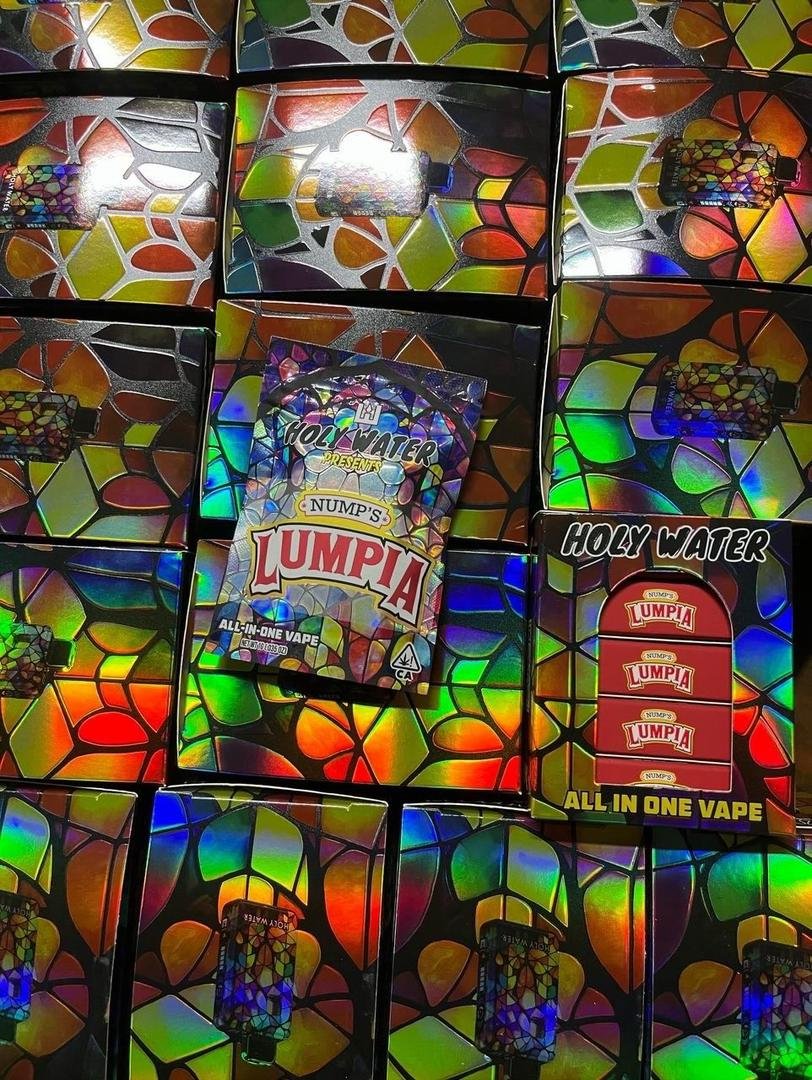
HOLY WATER PRESENTS 1G DISPOSABLE ALL IN ONE VAPE
Price range: $25.00 through $1,450.00
The HOLY WATER PRESENTS 1G Disposable All-In-One Device is a fully self-contained vaporization unit engineered to deliver consistent hardware performance through a sealed, maintenance-free design. Built around a reinforced chassis and an internal alignment system, the device maintains structural integrity while supporting controlled airflow, stable heating behavior, and predictable operation throughout its single-use lifespan. Its sealed reservoir chamber is securely enclosed to prevent leaks, while the centrally positioned heating element operates within a regulated thermal zone that helps ensure uniform activation under normal conditions.
Description
HOLY WATER PRESENTS 1G DISPOSABLE ALL-IN-ONE DEVICE – Precision-Engineered Portable Vaporization Hardware
Device Architecture and Core Engineering
The HOLY WATER PRESENTS 1G Disposable All-In-One Device is built upon a structurally unified architecture designed to support long-lasting stability, internal alignment, and consistent mechanical behavior. Because disposable vaporization hardware must function without user calibration or maintenance, the foundational engineering emphasizes precision fitment, secure component placement, and a balanced internal layout that protects each mechanism throughout the device’s operational lifespan holy water disposable.
At the center of the architecture is the primary chassis—a reinforced, impact-resistant shell molded from high-durability composite materials. These materials were selected for their ability to maintain rigidity under pressure while still offering enough flexibility to absorb everyday stress. The exterior shell distributes force evenly across its surface, helping prevent fractures, compression damage, or distortion during transport, storage, or normal handling. This structural resilience ensures that the internal components remain shielded from mechanical shock.
Inside the chassis, the device employs an integrated support frame engineered to keep all internal elements locked into place. This frame includes stabilizing brackets that prevent the battery, draw sensor, reservoir chamber, and heating assembly from shifting over time. By reducing micro-movement caused by vibration or repeated handling, the support frame helps preserve internal alignment and prevents premature wear that could otherwise affect airflow consistency or activation sensitivity.
The reservoir chamber is housed within a reinforced enclosure that maintains its shape under thermal and mechanical stress. Because the reservoir must remain sealed and stable, the enclosure uses a molded, single-piece design that minimizes points of weakness. This prevents expansion, deformation, or internal pressure imbalance, even when exposed to extended heating cycles. Additionally, the smooth internal walls reduce stress concentration, contributing to long-term chamber integrity.
The heating element is positioned with precise vertical and horizontal alignment to ensure uniform exposure to airflow. Its placement at the core of the device allows heat distribution to remain balanced throughout each activation cycle. This alignment also supports predictable thermal behavior, reducing the likelihood of hot spots, inconsistent heating, or mechanical strain on the surrounding insulation layers.
Airflow integration is a critical part of the device’s architecture. The internal air channel is shaped to guide airflow directly over the heating zone before reaching the activation sensor. The pathway uses gradual curves rather than sharp angles, which reduces turbulence and helps maintain steady, controlled movement of air. This internal geometry also ensures that the air channel retains its shape even under thermal expansion, supporting consistent activation performance.
The battery is housed within a secure, insulated compartment located at the base of the device. This compartment protects the battery from temperature fluctuations originating in the heating assembly while maintaining stable electrical contact. Its design includes shock-absorbing supports that cushion the battery from external impacts, preventing disconnection or internal wear.
All components are assembled using a fused, closed-system construction that eliminates the need for screws, removable panels, or user-accessible sections. This approach strengthens the overall structural stability while reducing potential failure points. By integrating the device into a single unified body, the architecture maintains its intended dimensional accuracy for the full lifespan of the product.
Collectively, these architectural elements create a device engineered for consistency, reliability, and structural endurance. Every internal feature—from the reservoir housing to the activation sensor—operates within a framework designed to maintain alignment and protect critical mechanisms. This ensures that the HOLY WATER PRESENTS 1G Disposable All-In-One Device performs as intended without requiring manual adjustments, user maintenance, or external calibration.
Power Distribution, Thermal Stability, and Activation Controls
The power and thermal management system within the HOLY WATER PRESENTS 1G Disposable All-In-One Device forms one of the most essential elements of its internal engineering. Because a disposable unit must operate without manual adjustments, recharging, or component replacement, the internal power flow, heating behavior, and activation controls must be designed to function in complete harmony. Section 2 explores these systems in depth, focusing on how they maintain consistent output, stable temperature regulation, and responsive activation performance through a sealed, maintenance-free design.
At the foundation of this system is a non-rechargeable lithium-based battery that is factory-calibrated for stable, predictable output. Instead of allowing voltage spikes or irregular drops—which can negatively affect thermal behavior—the battery delivers a controlled discharge curve that helps maintain uniform performance. This ensures that the heating element receives a steady supply of power throughout the operational life of the device, preventing fluctuations that could lead to inconsistent activation or uneven heating.
To support this stable power flow, the internal circuitry is designed with micro-regulators that modulate energy distribution based on real-time demand. These components function automatically, adjusting the current delivered to the heating element in response to airflow activation. Because the system only engages during inhalation, power waste is minimized, and internal strain on the electrical components is reduced. The regulators also provide voltage smoothing, preventing the battery from overstressing the heating element.
The heating element itself is constructed from heat-resistant alloys chosen for their ability to maintain stable conductivity under repetitive thermal cycles. When activated, the heating element enters a controlled thermal zone that allows it to reach operational temperature efficiently while avoiding overheating. The alloys are selected for their consistent resistance profile, meaning that their heating characteristics remain stable across hundreds of activation events. This stability supports predictable performance and reduces the possibility of thermal degradation.
Thermal stability is further enhanced through the use of insulation layers strategically positioned around the heating assembly. These layers protect adjacent components—including the battery and reservoir—from excess heat exposure. Because elevated temperatures can cause structural or mechanical stress, the insulation materials maintain consistent boundaries within the device, promoting long-term reliability. The insulation also contributes to thermal efficiency by ensuring that heat remains concentrated in the intended area.
The activation system operates through a draw-activated sensor located within the airflow pathway. This sensor responds to changes in air pressure created during inhalation, triggering the battery to deliver power to the heating element. The sensor’s calibration ensures that activation occurs only when intended, preventing accidental engagement due to minor airflow disturbances. Its sensitivity level is tuned to balance responsiveness with control, reducing activation lag without creating unnecessary false triggers.
A key component of the activation system is its integration with the airflow channel geometry. As air enters the device, it travels across the sensor chamber, creating a pressure differential that prompts activation. The geometry of this chamber is designed to guide airflow efficiently without creating turbulence or delays. This reduces mechanical load on the sensor and promotes consistent activation speed.
Additionally, the activation controls include built-in cutoffs to prevent operation outside of safe parameters. If the battery drops below a predetermined voltage level or if the heating element reaches a temperature outside its intended range, the system automatically stops activation. These protective measures ensure that internal components remain within safe operational conditions and prevent stress-related failures.
Environmental factors are also accounted for within the power and thermal system. Temperature fluctuations can impact battery efficiency and heating element responsiveness. To offset this, the device incorporates temperature-stable materials and adaptive regulation techniques that help maintain performance despite changes in ambient conditions. For example, the battery compartment is partially insulated to reduce the impact of cold environments, which can slow lithium discharge rates.
The combination of the power system, heating assembly, and sensor integration forms a unified operational cycle that activates only when necessary, delivering consistent performance with each use. The system’s automated nature eliminates the need for external buttons or adjustments, reinforcing the device’s maintenance-free design.
Finally, the long-term reliability of the power and thermal management system is validated through simulated lifecycle testing. These tests include repeated activation cycles, temperature stress testing, voltage fluctuation simulations, and airflow variability assessments. The results confirm that the internal systems maintain their intended behavior throughout the operational life of the device holy water disposable.
In summary, Section 2 illustrates how power distribution, thermal stability, and activation controls work together to support a predictable and stable user experience. Through precise energy regulation, controlled heating behavior, and carefully calibrated activation mechanisms, the HOLY WATER PRESENTS 1G Disposable All-In-One Device maintains consistent hardware performance without requiring user involvement holy water disposable.
Airflow Mechanics, Channel Geometry, and Fluid Path Control
The airflow mechanics of the HOLY WATER PRESENTS 1G Disposable All-In-One Device play a critical role in maintaining activation consistency, internal pressure balance, and overall mechanical reliability. Because the device depends entirely on draw activation without any external buttons or adjustment interfaces, its airflow system must deliver stable holy water disposable, predictable performance across the entire lifespan of the hardware. Section 3 provides a detailed exploration of the airflow channel design holy water disposable, fluid path geometry, activation responsiveness, structural stabilization, and pressure-regulation strategies that define this system holy water disposable.
At the foundation of the airflow system is a single continuous channel engineered to guide air efficiently from the mouthpiece through the heating chamber and down toward the activation sensor. This linear structure reduces the likelihood of turbulence, allowing the device to maintain smooth, consistent airflow during each draw. Turbulence can result in uneven heating or delayed sensor activation, so the internal pathway uses rounded contours and gradual transitions to ensure fluid motion holy water disposable.
The mouthpiece entrance is shaped to direct airflow inward at a controlled rate. Its ergonomic contouring allows comfortable placement while ensuring that the airflow is funneled evenly into the internal channel. Because sharp angles or abrupt openings could disrupt fluid motion, the mouthpiece interior uses a tapered conical design that stabilizes airflow before it enters the central pathway holy water disposable.
Once inside, airflow moves through a reinforced channel that is thermally stable and resistant to deformation. Many materials can warp or expand slightly under prolonged exposure to heat, but the composite used in this device is engineered to remain dimensionally consistent. This prevents constriction or widening of the airflow pathway over time holy water present 1g vape. Maintaining the correct geometry is essential for preserving consistent draw resistance and predictable heating performance holy water disposable.
The airflow channel then directs air into the heating zone. Here, the geometry is carefully calibrated to ensure that air passes evenly over the heating element. If airflow were concentrated in one area, it could lead to uneven thermal distribution, reduced vaporization efficiency, or overheating of certain coil sections. To prevent this, the device features a heat-distribution chamber that evenly disperses airflow before it reaches the sensor holy water disposable.
Within the heating zone, airflow also plays a secondary role in regulating temperature. As air passes over the heating element, it helps dissipate excess heat, providing passive cooling holy water disposable. This contributes to maintaining the heating element within its ideal temperature range and preventing thermal stress on surrounding materials. Because the device lacks external temperature controls, this built-in airflow-based cooling is an important passive regulation mechanism holy water disposable.
After moving through the heating zone, airflow travels toward the activation sensor. This sensor is designed to detect pressure changes caused by inhalation holy water disposable. Its position at the terminus of the airflow pathway ensures that the airflow reaching it is steady and consistent. The sensor responds only when airflow meets specific thresholds, preventing accidental activation from minor air disturbances.
The sensor chamber geometry is shaped to create a focused pressure zone. This allows the sensor to detect airflow with greater accuracy while reducing the impact of external environmental factors. Precise calibration ensures that users experience consistent activation timing across all draws holy water disposable.
A critical factor in airflow consistency is internal pressure balancing holy water present 1g dsiposable. During operation, airflow movement creates pressure differences inside the device holy water disposable. To stabilize these fluctuations, micro-venting structures are integrated into the base of the device holy water disposable. These vents maintain internal equilibrium without allowing external contaminants to enter holy water disposable. By preventing pressure buildup, the vents help the device sustain consistent draw resistance from beginning to end holy water disposable.
Condensation management is another engineering priority holy water disposable. Thermal changes can cause condensation to accumulate within the airflow pathway holy water disposable. Without proper management, this moisture could obstruct airflow, alter resistance, or affect sensor responsiveness holy water disposable. To counter this, the device includes moisture-dispersal channels designed to wick condensation away from the main airflow path. These channels help maintain uninterrupted draw quality throughout extended use holy water disposable.
The airflow pathway is also reinforced with vibration-resistant support structures. During handling, movement, or transport, mechanical vibrations can disrupt internal components. The HOLY WATER PRESENTS 1G Disposable All-In-One Device minimizes this risk by anchoring the airflow channel within a stable internal frame holy water disposable. This reinforcement prevents misalignment that might otherwise lead to airflow inconsistencies holy water disposable.
Additionally, the airflow system maintains independence from battery performance. In some devices, battery decline can cause reduced heating responsiveness or delayed activation, indirectly affecting airflow-driven performance. However holy water disposable, the airflow channel in this device functions mechanically and is not influenced by voltage fluctuations holy water disposable. This ensures that activation remains consistent even as battery capacity gradually declines holy water disposable.
Noise reduction is another consideration in airflow design. Irregularities in channel geometry can create whistling sounds or vibration noises during inhalation holy water disposable. To counter this, the air pathway is shaped to eliminate abrupt changes in angle or diameter. This smooth geometry promotes quiet operation, which contributes to overall mechanical refinement holy water disposable.
Finally, the airflow mechanics are validated through extensive testing holy water disposable. Simulated draw cycles holy water 1g disposable, pressure variation assessments, humidity exposure tests, and vibration simulations ensure that the airflow channel performs reliably under a wide range of real-world conditions holy water disposable.
In summary, Section 3 highlights the precision engineering behind the airflow system of the HOLY WATER PRESENTS 1G Disposable All-In-One Device. Through stable channel geometry, controlled pressure zones, responsive sensor alignment, moisture management, and noise-reduction features, the airflow mechanics support predictable activation holy water disposable, consistent thermal performance, and long-term structural stability.
Structural Durability, Material Strength, and Protective Reinforcement – holy water vape
The structural durability of the HOLY WATER PRESENTS 1G Disposable All-In-One Device is a defining aspect of its hardware engineering, ensuring that the unit maintains stability, alignment, and protective integrity throughout its entire operational lifespan holy water disposable. Because the device is designed as a closed, maintenance-free system, every structural component must support long-term reliability without requiring tightening holy water disposable, recalibration, or part replacement. Section 4 examines the material science holy water disposable, reinforcement strategies, impact resistance, thermal shielding, environmental tolerance, and internal stabilization methods that contribute to the device’s durability holy water disposable.
At the core of the device’s structural design is a unibody external shell constructed from high-strength composite materials holy water disposable. These composites are formulated to resist cracking, compression, and torsion without adding unnecessary weight holy water disposable. By distributing stress evenly across the shell holy water disposable, the device avoids weak points that could compromise internal components. The material’s molecular structure provides inherent resilience, allowing it to absorb minor impacts without deforming or transferring excessive force to the interior holy water disposable.
Internally, the device features a multi‑layer reinforcement frame that stabilizes essential hardware. This internal frame includes battery cradles, reservoir supports, airflow channel anchors, and sensor alignment brackets. Each of these supports is engineered to prevent micro‑shifting—a common cause of performance degradation in disposable devices holy water disposable. Without these reinforcements, vibration, movement, or pressure could misalign the heating element, alter airflow resistance holy water disposable, or disrupt electrical contact holy water disposable.
The reservoir housing is another critical durability feature. It is constructed from a heat‑resistant polymer that retains its shape under prolonged thermal exposure. Because heating cycles can create internal pressure differentials, the reservoir chamber must maintain dimensional accuracy to prevent expansion, wall fatigue, or stress fractures holy water disposable. The smooth, single‑piece construction of the chamber prevents weak points that could otherwise develop under thermal strain holy water disposable.
Thermal durability is further enhanced by the use of insulating layers placed strategically around the heating assembly. These insulation barriers shield the battery, sensor, and structural frame from heat exposure, reducing the possibility of warping or heat‑induced material fatigue. The insulation also ensures that heat remains concentrated in the intended operational zone, improving efficiency while protecting surrounding components holy water disposable.
The device’s durability extends to vibration resistance. During transport or daily use, the device is exposed to continual small‑scale vibrations that can gradually shift internal components in poorly reinforced systems. To prevent this, the HOLY WATER PRESENTS 1G Disposable All-In-One Device uses shock‑absorbing mounts and anchored brackets that keep sensitive components firmly in position. This reinforcement ensures long‑term stability even when the device is stored in bags, pockets, or glove compartments holy water disposable.
Impact resistance is another essential consideration. While no device is completely immune to damage, the composite shell and internal frame work together to minimize the effects of accidental drops or crushing pressure. The device’s outer shell slightly flexes upon impact to dissipate force holy water vape, while the internal frame prevents critical parts from absorbing damaging shock holy water disposable.
Environmental resistance plays a significant role in the device’s overall lifespan. Exposure to temperature fluctuations, humidity, and UV light can degrade certain materials over time. The device’s shell is formulated to resist UV discoloration, molecular breakdown, and structural softening. Moisture‑resistant coatings help prevent humidity from affecting the material’s strength, while the sealed internal architecture protects components from condensation or environmental contaminants.
Chemical resistance is also integrated into the design. While not intended for exposure to harsh chemicals, the exterior surface withstands skin oils, mild cleaning agents, and environmental residues without degrading or losing structural integrity. This preserves both the functionality and appearance of the device throughout its usage cycle.
Another major element of the device’s durability framework is the battery compartment design. The battery is enclosed within a reinforced cradle engineered to distribute external force evenly, minimizing risk of damage. This cradle prevents battery movement, which could otherwise lead to electrical disconnection, internal abrasion, or compromised activation behavior. Keeping the battery stable is essential for maintaining consistent power delivery.
The heating element is also protected through a reinforced mounting system that maintains its precise position within the airflow channel. Even slight misalignment can disrupt heating efficiency or airflow consistency. The reinforced mount prevents displacement caused by thermal expansion, mechanical shock, or vibration.
Furthermore, the one‑piece sealed construction of the device significantly improves long‑term durability by eliminating seams, hinges, or removable panels that could loosen or separate over time. A seamless design reduces points of mechanical failure and strengthens the overall structural body.
Durability testing validates these engineering strategies. The device undergoes impact drop tests, compression stress assessments, rapid temperature cycling, vibration simulations, and prolonged heating exposure. These tests confirm the structural resilience of the shell, the stability of internal supports, and the reliability of the reinforcement system under a variety of real‑world conditions.
In summary, Section 4 demonstrates that the HOLY WATER PRESENTS 1G Disposable All-In-One Device is engineered for long‑term durability through high‑strength materials, reinforced internal framing, thermal shielding, vibration resistance, environmental protection, and precision component stabilization. These durability features ensure that the device maintains its structural integrity and intended performance throughout its entire single‑use lifecycle.
Related products
-
Sale!

CRYBABY 2G DISPOSABLE LIVE RESIN LIQUID DIAMONDS
Price range: $25.00 through $1,400.00Select options This product has multiple variants. The options may be chosen on the product page -
Sale!

OG CAKE 2G DISPOSABLE SHE HITS DIFFERENT
Price range: $25.00 through $1,450.00Select options This product has multiple variants. The options may be chosen on the product page -
Sale!

WHOLE MELT EXTRACTS PHASE TWO 2G DISPOSABLE DUAL CHAMBER
Price range: $30.00 through $1,500.00Select options This product has multiple variants. The options may be chosen on the product page -
Sale!

PLUME PARLAY 2G DISPOSABLE
Price range: $30.00 through $1,300.00Select options This product has multiple variants. The options may be chosen on the product page
Reviews
There are no reviews yet.