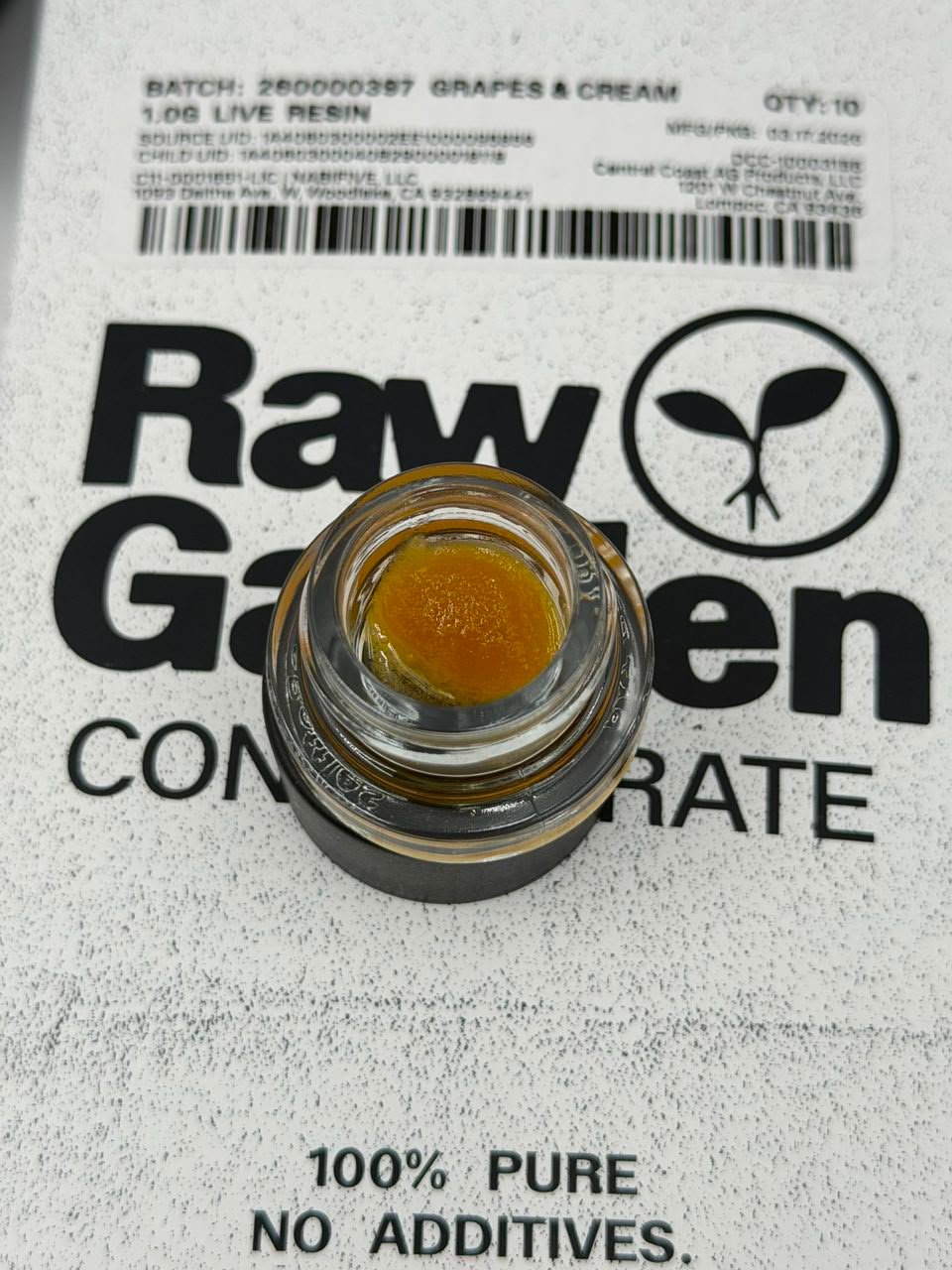
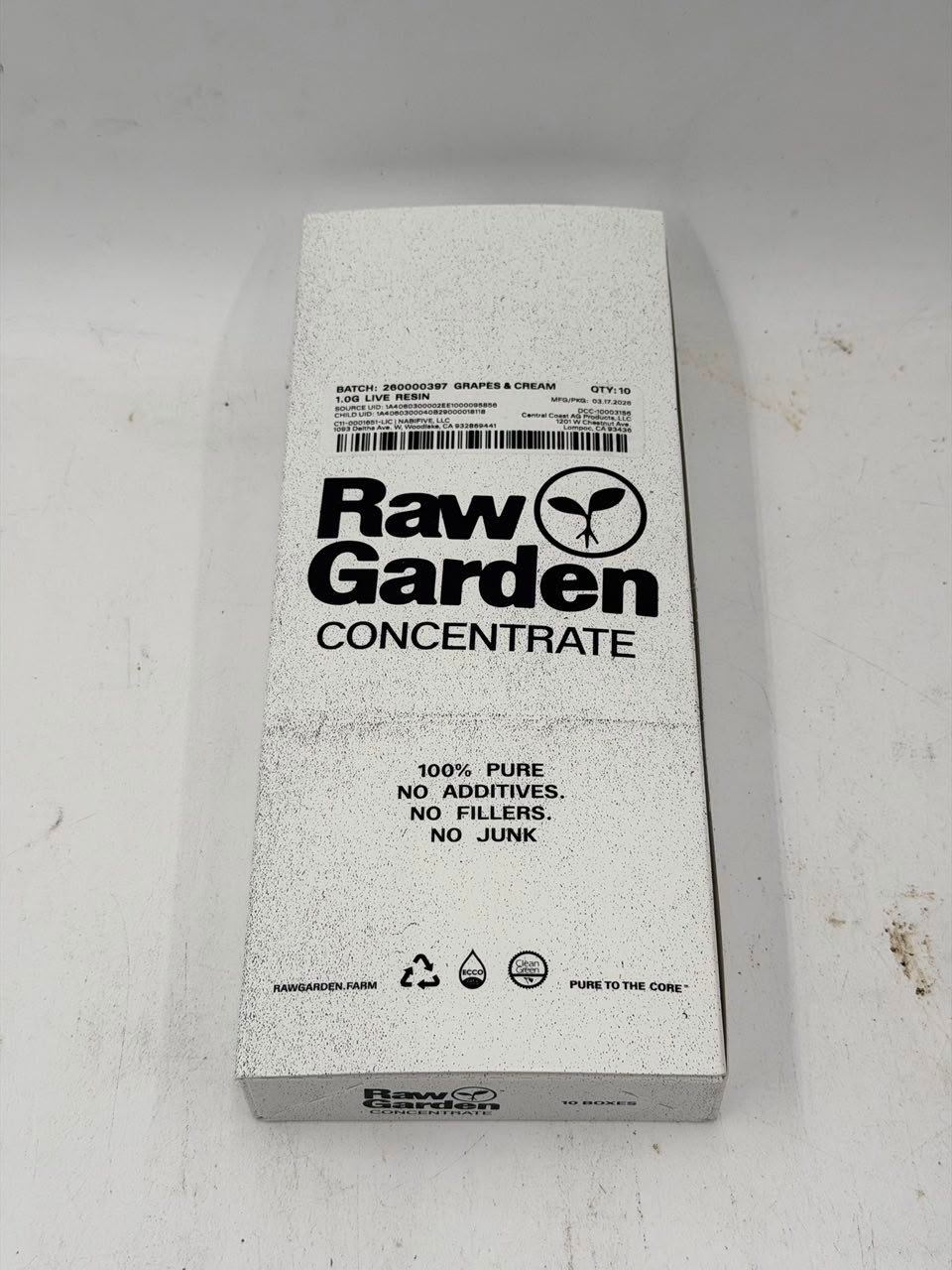
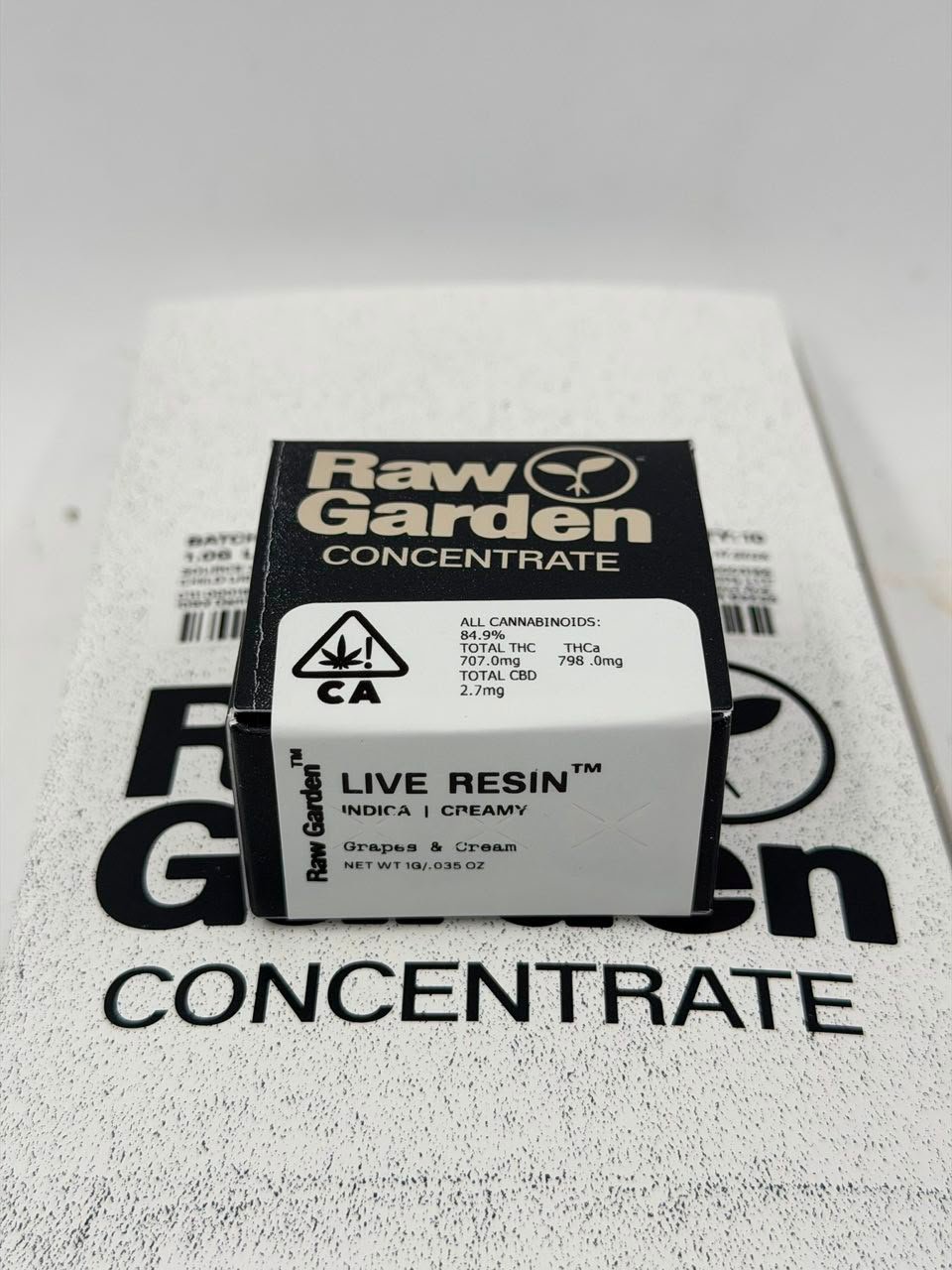

RAW GARDEN 1G LIVE RESIN PUCK: Informational Product Guide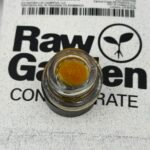
The RAW GARDEN 1G LIVE RESIN PUCK is a cannabis concentrate product that can be described through its format, extraction terminology, cannabinoid profile, terpene characteristics, and packaging specifications. Because concentrate products can vary by batch and jurisdiction, the information provided on the original packaging and laboratory documentation should always be treated as the authoritative source.
Live resin is generally associated with cannabis material that has been preserved at very low temperatures soon after harvesting. As a result, more of the plant’s naturally occurring aromatic compounds can be retained during processing. The finished concentrate can therefore be distinguished from products made from conventionally dried and cured cannabis.
What Is the RAW GARDEN 1G LIVE RESIN PUCK?
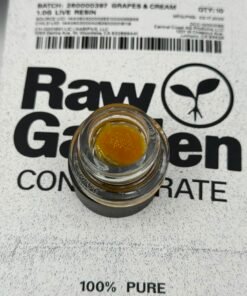
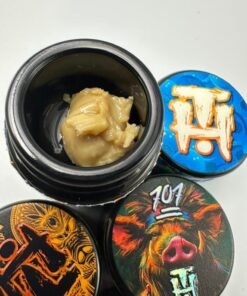
The RAW GARDEN 1G LIVE RESIN PUCK is presented in a compact puck-style concentrate format. The 1G designation generally refers to a nominal net quantity of one gram, although the exact labeled weight should always be confirmed on the individual package.
Unlike dried flower, a live resin product is produced as a concentrated cannabis extract. Consequently, cannabinoids and aromatic compounds are present in a considerably more concentrated form than they are in untreated plant material.
The term “live resin” refers primarily to the handling and processing of the cannabis material rather than representing a specific cannabinoid percentage or potency level. Therefore, two products described as live resin can still differ substantially in cannabinoid content, terpene composition, appearance, consistency, and laboratory results.
Key Product Information
- Product: RAW GARDEN 1G LIVE RESIN PUCK
- Product category: Cannabis concentrate
- Format: Puck-style concentrate
- Nominal quantity: 1 gram
- Extraction terminology: Live resin
- Cannabinoids: Should be verified from the applicable laboratory report
- Terpenes: Should be verified from the applicable laboratory report
- Batch information: Should be checked against the product label
- Legal status: Depends on local laws and regulations
- Age restrictions: Applicable requirements should be followed
Understanding Live Resin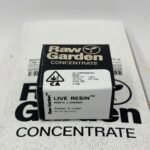
Live resin is generally produced from cannabis plants that have been harvested and preserved without undergoing the conventional drying and curing process normally associated with flower production.
Instead, freshly harvested plant material is typically frozen or otherwise preserved at very low temperatures. This approach is intended to help retain volatile compounds that could otherwise be reduced during drying and curing.
As a result, live resin is commonly recognized for its pronounced aromatic characteristics. However, the exact sensory profile should not be assumed from the product name alone. Genetics, cultivation methods, harvest timing, extraction methods, storage conditions, and post-processing can all influence the final concentrate.
Why Fresh-Frozen Material Matters
Fresh cannabis contains naturally occurring cannabinoids and aromatic compounds. During traditional drying and curing, some volatile compounds can change or dissipate.
By contrast, fresh-frozen processing is designed to preserve more of those compounds before extraction. Consequently, live resin can exhibit a different aromatic profile from concentrates produced using dried starting material.
Nevertheless, preservation of aromatic compounds does not automatically indicate a particular potency, quality grade, or consumer experience. Laboratory testing remains the more reliable source for measurable product characteristics.
Understanding the 1G Format
The “1G” in RAW GARDEN 1G LIVE RESIN PUCK refers to a nominal one-gram quantity.
Concentrates are often packaged in relatively small containers because cannabinoids and other compounds are concentrated into a smaller physical volume than the original plant material.
A one-gram package may therefore contain a relatively compact amount of material. The physical appearance can vary depending on temperature, formulation, extraction characteristics, and storage conditions.
For accurate information, the net weight printed on the packaging should be checked rather than relying solely on the product name.
Puck-Style Concentrate
The word “puck” generally describes the compact physical presentation of the concentrate.
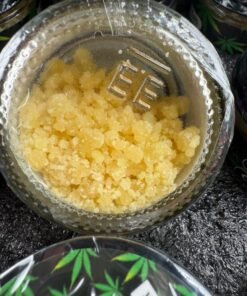
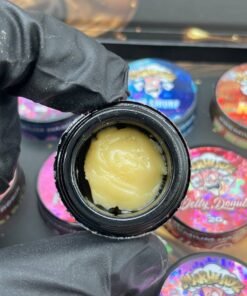
Depending on processing and packaging, a puck may appear dense, soft, glossy, opaque, translucent, or otherwise textured. Temperature can also affect its consistency.
When stored in warmer conditions, concentrate may become softer. In cooler conditions, it may become firmer. These changes do not necessarily indicate a change in the labeled quantity.
Cannabinoids and Laboratory Information
Cannabinoids are naturally occurring chemical compounds found in cannabis.
Among the cannabinoids commonly reported on cannabis laboratory certificates are THC, THCA, CBD, CBDA, CBG, and other minor cannabinoids. However, the cannabinoid composition of a particular RAW GARDEN 1G LIVE RESIN PUCK should not be inferred from its name.
Instead, the applicable laboratory report should be consulted.
Why Laboratory Testing Matters
Laboratory testing can provide information that cannot reliably be determined from appearance alone.
Depending on jurisdiction and testing requirements, a certificate of analysis may contain information concerning:
- Cannabinoid concentrations
- Terpene concentrations
- Microbial testing
- Residual solvents
- Heavy metals
- Pesticide screening
- Foreign materials
- Batch identification
- Testing dates
Consequently, consumers and retailers should rely on current, batch-specific documentation whenever it is available.
Terpenes in Live Resin
Terpenes are aromatic compounds naturally produced by many plants, including cannabis.
They contribute to the characteristic scent and flavor profiles associated with different cannabis varieties. Because live resin is produced using fresh-frozen plant material, a broader range of volatile aromatic compounds may be retained compared with some extraction processes involving dried material.
However, terpene composition can vary significantly from one batch to another.
Commonly Reported Cannabis Terpenes
Laboratory reports may identify compounds such as:
- Myrcene
- Limonene
- Caryophyllene
- Linalool
- Pinene
- Humulene
- Terpinolene
The presence and concentration of these compounds should always be confirmed through the relevant laboratory documentation.
Furthermore, terpene percentages should not be interpreted as guarantees of a particular subjective experience. Individual responses can vary considerably.
Appearance and Consistency
The appearance of a RAW GARDEN 1G LIVE RESIN PUCK may vary according to the batch, extraction process, temperature, and storage environment.
Live resin can display a range of textures and colors. Depending on the formulation, it may appear golden, amber, yellow, light brown, or another shade.
Similarly, consistency may range from relatively firm to soft or viscous.
Therefore, appearance alone should not be used as a definitive indicator of potency, purity, authenticity, or laboratory quality.
Temperature and Texture
Temperature can have a noticeable effect on concentrate consistency.
At warmer temperatures, the material may become softer and more fluid. Conversely, cooler temperatures may cause it to become firmer.
For that reason, differences in texture between two observations do not necessarily indicate that the product itself has changed composition.
Storage recommendations printed by the manufacturer should be followed whenever they are available.
Packaging and Product Identification
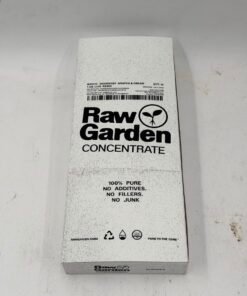
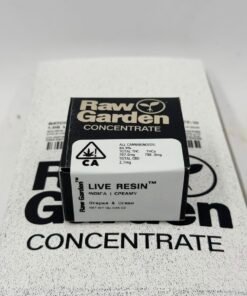
Product packaging is important because it provides information that cannot be reliably determined from the product’s appearance.
For a packaged cannabis concentrate, consumers should review the available labeling carefully.
Important information can include:
- Product name
- Net weight
- Batch or lot number
- Manufacturing information
- Laboratory testing information
- Cannabinoid content
- Terpene information
- Applicable warnings
- Regulatory symbols
- Age restrictions
- Packaging date or testing date
A package should also remain appropriately sealed and intact according to applicable regulations.
Storage Considerations
Proper storage can help preserve the physical characteristics of cannabis concentrates.
Environmental factors such as temperature, light, humidity, and exposure to air can affect the appearance and consistency of concentrate products.
Consequently, manufacturer-provided storage instructions should be followed whenever they are available.
Direct heat and excessive exposure to light should generally be avoided. Containers should also remain properly closed when not being handled.
Because storage requirements can differ between products and jurisdictions, the original manufacturer’s instructions should take priority.
Responsible Product Handling
Cannabis concentrates are substantially more concentrated than many forms of cannabis flower.
For that reason, products such as the RAW GARDEN 1G LIVE RESIN PUCK should be handled responsibly and in accordance with applicable laws.
Individuals who are unfamiliar with cannabis concentrates should consult qualified local resources regarding applicable regulations, product labeling, and safety considerations.
Products should also be kept securely away from children, pets, and anyone who is not legally permitted to possess cannabis.
Legal and Age Requirements
Cannabis laws differ considerably between countries, states, provinces, and municipalities.
Accordingly, the legality of possessing or using a cannabis concentrate should never be assumed based solely on the availability of a product elsewhere.
Local regulations should be reviewed before purchasing, possessing, transporting, or using cannabis products.
Age restrictions should also be observed in every applicable jurisdiction.
RAW GARDEN 1G LIVE RESIN PUCK and Product Transparency
Product transparency is especially important for concentrated cannabis products.
A clear product listing should distinguish verified information from general descriptions. For example, a retailer should not represent a specific THC percentage unless that percentage has been confirmed through appropriate product documentation.
Similarly, terpene descriptions should not be presented as laboratory facts unless they have been verified.
This approach helps consumers understand exactly what has been documented about a particular batch.
What Should Be Verified?
Before relying on product information, the following details should be checked:
- Product identity
- Net weight
- Batch number
- Laboratory report
- Cannabinoid profile
- Terpene profile
- Applicable warnings
- Manufacturing information
- Expiration or recommended-use information, where applicable
- Local legal requirements
Frequently Asked Questions
What does “live resin” mean?
Live resin generally refers to cannabis extract produced from plant material that has been preserved, commonly through freezing, shortly after harvest. The process is intended to retain more naturally occurring volatile compounds before extraction.
What does 1G mean?
The “1G” designation generally indicates a nominal net quantity of one gram. The precise labeled quantity should always be confirmed on the package.
Is live resin the same as cannabis flower?
No. Live resin is a concentrated cannabis extract, while flower refers to the harvested cannabis inflorescence. Their physical characteristics, cannabinoid concentrations, terpene profiles, and handling requirements can differ substantially.
Does the name determine potency?
No. A product name should not be treated as a substitute for laboratory testing. Cannabinoid concentrations should be verified using the applicable batch-specific documentation.
Why can live resin have a strong aroma?
Live resin is commonly produced from fresh-frozen cannabis material. Because volatile aromatic compounds can be preserved during this process, the resulting concentrate may have a pronounced aroma.
Can texture change over time?
Yes. Temperature and storage conditions can affect concentrate consistency. A product may become softer in warmer environments and firmer in cooler environments.
How should the product be stored?
Storage instructions supplied by the manufacturer should be followed. In general, exposure to excessive heat, direct light, and unnecessary air exposure should be minimized.
Is the product legal everywhere?
No. Cannabis concentrate regulations vary by jurisdiction. Local laws should always be consulted before possession, transportation, purchase, or use.
Product Summary
The RAW GARDEN 1G LIVE RESIN PUCK can be understood as a compact, one-gram cannabis concentrate presented in a puck-style format and described using live-resin extraction terminology.
Its characteristics are influenced by the cannabis genetics used, harvesting practices, fresh-frozen preservation, extraction process, cannabinoid composition, terpene profile, packaging, and storage conditions.
Most importantly, product-specific information should be verified through the original label and applicable laboratory documentation. Because cannabis regulations and labeling requirements vary by location, current local requirements should also be observed.
For consumers, retailers, and informational websites, accurate descriptions are best supported by verifiable batch information rather than assumptions based solely on appearance, branding, or product terminology.
Product Information Highlights
- RAW GARDEN 1G LIVE RESIN PUCK is a cannabis concentrate format.
- 1G generally identifies the nominal one-gram net quantity.
- Live resin refers to an extraction approach involving preserved cannabis material.
- Fresh-frozen processing is intended to retain naturally occurring volatile compounds.
- Cannabinoid and terpene concentrations should be verified through laboratory documentation.
- Texture can change according to temperature and storage conditions.
- Packaging should be checked for batch-specific information and regulatory details.
- Local cannabis laws and age restrictions should always be followed.
- Products should be stored securely and kept away from children and pets.
- Appearance alone should not be treated as proof of potency, purity, or authenticity.
Final Information Note
The RAW GARDEN 1G LIVE RESIN PUCK represents a specific format within the broader category of cannabis concentrates. Its defining terminology is associated with fresh-frozen cannabis processing and a compact one-gram presentation.
Nevertheless, individual batches can differ. Therefore, the most accurate product information will always be obtained from the current package label, certificate of analysis, and applicable regulatory documentation.
By focusing on verified specifications, transparent labeling, responsible handling, and local compliance, product information can be presented clearly and responsibly while helping readers better understand what live resin and puck-style cannabis concentrates represent.
RAW GARDEN 1G LIVE RESIN PUCK: Detailed Product Education
Understanding a cannabis concentrate requires more than simply looking at its product name. Several factors are involved, including the source material, extraction terminology, cannabinoid composition, terpene profile, physical consistency, packaging, storage, and applicable regulations. Therefore, the RAW GARDEN 1G LIVE RESIN PUCK can be examined from several informational perspectives without relying on assumptions about a particular batch.
How Cannabis Concentrates Differ From Flower
Cannabis flower represents the harvested flowering portion of the cannabis plant. Concentrates, by comparison, are produced by separating and concentrating selected compounds from cannabis material.
Because the compounds are concentrated, the physical quantity of concentrate can be considerably smaller than the amount of plant material from which it originated. As a result, concentrate products are typically packaged in small containers with clearly stated net weights.
The RAW GARDEN 1G LIVE RESIN PUCK is identified by a one-gram format and live-resin terminology. However, those terms alone do not establish a specific cannabinoid percentage, terpene concentration, or laboratory result.
Instead, batch-specific documentation should be consulted whenever precise information is required.
Important Distinctions
Several terms that appear on cannabis packaging can describe different aspects of a product:
- Flower describes the original cannabis plant material.
- Concentrate describes an extract in which selected cannabis compounds have been concentrated.
- Live resin describes an extraction category associated with freshly harvested and preserved cannabis material.
- 1G generally identifies the nominal net quantity.
- Puck describes the physical presentation or shape of the concentrate.
Consequently, these terms should not be treated as interchangeable.
The Role of Fresh-Frozen Cannabis
Fresh-frozen cannabis is an important part of the live-resin concept.
Rather than being allowed to undergo the traditional drying and curing process before extraction, cannabis intended for live-resin production is generally preserved at low temperatures soon after harvest.
This approach is used because naturally occurring volatile compounds can be affected by drying, heat, oxygen, and time. By reducing exposure to those conditions before extraction, a greater portion of the plant’s original aromatic character may be retained.
Nevertheless, the final composition is influenced by many variables. Cultivar genetics, cultivation conditions, harvest timing, preservation methods, extraction parameters, and post-processing can all contribute to the resulting concentrate.
Why Terpene Preservation Is Relevant
Terpenes are volatile organic compounds that contribute to aroma and flavor.
Cannabis plants naturally produce numerous terpenes. Different cultivars can therefore have distinctly different aromatic profiles.
With live-resin processing, preservation of volatile compounds is one of the principal reasons the technique is used. Consequently, live resin may display a more pronounced plant-derived aroma than some concentrates produced from dried material.
However, a strong aroma should not automatically be interpreted as evidence of superior potency or purity. Those characteristics require appropriate testing.
Understanding Cannabinoid Concentration
Cannabinoids are another major component of cannabis concentrates.
THC and CBD are among the best-known cannabinoids, although cannabis contains many additional compounds. Depending on the variety and production process, other cannabinoids may also be detected.
The concentration of cannabinoids can vary considerably among products and batches. Therefore, the RAW GARDEN 1G LIVE RESIN PUCK should not be assigned a specific potency value unless that value has been confirmed by an applicable laboratory report.
THCA and THC
Cannabis laboratory reports can distinguish between acidic cannabinoids and their neutral forms.
THCA is the acidic precursor associated with THC. Through processes involving heat, THCA can be converted into THC.
Because laboratory reporting conventions vary, the exact values and calculations presented on a package should be interpreted according to the regulations governing that product.
For accurate product documentation, the original laboratory certificate should be consulted rather than relying on generalized online descriptions.
Understanding Terpene Profiles
A terpene profile can provide useful information about the aromatic composition of a cannabis concentrate.
Common cannabis terpenes include myrcene, limonene, beta-caryophyllene, pinene, linalool, humulene, and terpinolene. However, not every product contains all of these compounds.
Furthermore, concentrations can vary substantially.
For the RAW GARDEN 1G LIVE RESIN PUCK, any specific terpene claim should therefore be supported by the appropriate laboratory documentation.
Why Terpene Claims Should Be Verified
Marketing terminology can sometimes be interpreted more broadly than laboratory terminology.
For example, describing a product as having a citrus, floral, pine-like, or earthy character is a sensory description. It does not necessarily identify a specific terpene or prove a particular terpene concentration.
A laboratory report, by contrast, can provide measurable analytical information.
This distinction allows product descriptions to remain informative while avoiding unsupported claims.
Physical Characteristics of Concentrates
Cannabis concentrates can display a wide range of physical characteristics.
Depending on formulation and processing, a concentrate may be soft, firm, sticky, glossy, opaque, translucent, or crystalline. Temperature can also change the apparent consistency.
The puck format provides a compact physical presentation. However, its precise appearance should not be assumed from the product name alone.
Color Variation
Color may range from pale yellow and gold to amber or darker shades.
Several factors can contribute to color variation, including:
- Cannabis genetics
- Harvest conditions
- Extraction techniques
- Oxidation
- Storage conditions
- Temperature
- Processing methods
For this reason, color should not be used by itself to determine quality, potency, or authenticity.
Storage and Environmental Conditions
Storage conditions can affect concentrate appearance and consistency.
Heat can cause some concentrates to become softer, while cooler conditions can make them firmer. Exposure to light and air may also influence the product over time.
Therefore, manufacturer instructions should be followed whenever they are provided.
A container should generally remain appropriately closed when the product is not being handled. Unnecessary exposure to environmental conditions should be minimized.
Why Proper Storage Matters
Maintaining suitable storage conditions can help preserve the characteristics documented at the time of packaging.
However, storage recommendations can vary according to formulation and packaging design. Consequently, a manufacturer’s instructions should take precedence over generalized storage advice.
Products should also be stored securely and kept inaccessible to children and pets.
Packaging Information to Review
A properly labeled cannabis concentrate should contain important information intended to help identify the product.
Depending on the jurisdiction, packaging may include:
- Product name
- Net weight
- Batch or lot number
- Manufacturer information
- Testing laboratory information
- Cannabinoid content
- Terpene information
- Production information
- Applicable warnings
- Regulatory symbols
- Age restrictions
The package should be inspected for consistency between the product itself and the printed information.
Batch Identification
Batch numbers are particularly useful because cannabis products can vary from one production run to another.
A laboratory certificate should correspond to the appropriate batch whenever batch-specific testing is available.
Consequently, a laboratory result from a different production batch should not automatically be treated as representative of the product currently being examined.
Laboratory Testing and Transparency
Laboratory testing is an important component of cannabis product transparency.
Testing can be performed for cannabinoids, terpenes, contaminants, and other parameters required under applicable regulations.
Depending on the jurisdiction, testing may include screening for pesticides, microbial contamination, heavy metals, residual solvents, and foreign materials.
Not every jurisdiction requires identical testing standards. Therefore, the relevant regulatory framework should always be considered.
Reading a Certificate of Analysis
A Certificate of Analysis, commonly abbreviated as COA, is a laboratory document that reports analytical findings.
When reviewing a COA, readers can compare the product name, batch number, testing date, cannabinoid results, terpene results, and other available analytical information with the information printed on the package.
This process can help establish whether the documentation corresponds to the specific product being examined.
Responsible Information for Consumers
Cannabis concentrates should be treated differently from ordinary consumer goods because their cannabinoid concentrations can be substantially higher than those found in many forms of flower.
For that reason, product information should be presented carefully and without unsupported guarantees.
Individual responses to cannabis can vary. Factors such as prior experience, individual sensitivity, product composition, and other circumstances can affect how a person responds.
Accordingly, generalized claims about effects should not be presented as universal outcomes.
Avoiding Unsupported Claims
Responsible product descriptions should avoid statements suggesting that a concentrate:
- Guarantees a particular experience
- Produces identical results for everyone
- Provides medical treatment
- Is completely risk-free
- Has a specific potency without laboratory evidence
- Is superior solely because of its color or texture
Instead, verifiable product characteristics should be emphasized.
Legal Considerations
Cannabis regulations vary considerably between jurisdictions.
Some regions permit certain cannabis products under regulated systems, while others restrict or prohibit them. Age requirements, possession limits, packaging standards, testing requirements, and transportation rules can also differ.
Consequently, the legal status of the RAW GARDEN 1G LIVE RESIN PUCK cannot be determined universally.
Current local regulations should always be consulted before any cannabis product is purchased, possessed, transported, or used.
Frequently Asked Questions
Why is live resin different from traditional extracts?
Live resin is generally produced using cannabis material that has been preserved soon after harvesting, often through freezing. Traditional extraction processes may instead use dried and cured plant material.
Does live resin always contain more terpenes?
Not necessarily. Live-resin processing is designed to help preserve volatile compounds, but the final terpene concentration depends on the starting material and production process. Laboratory testing provides the most reliable information.
Can the same product look different between batches?
Yes. Natural plant variation and production conditions can influence color, texture, aroma, and other physical characteristics.
Does a darker concentrate mean lower quality?
Not necessarily. Color can be influenced by genetics, processing, storage, oxidation, and other factors. It should not be used as a standalone quality measurement.
What does a COA provide?
A Certificate of Analysis provides laboratory findings for a particular product or batch. Depending on applicable requirements, it can contain cannabinoid, terpene, and contaminant-testing information.
Why should batch numbers be checked?
Batch numbers help connect the physical product with the correct production and laboratory records. This is particularly important because analytical results can differ between batches. coffee vape, crystal juice, menthol vape juice
Final Product Information
The RAW GARDEN 1G LIVE RESIN PUCK can be understood as a one-gram, puck-style cannabis concentrate associated with fresh-frozen cannabis extraction practices.
Its characteristics are shaped by the source material, preservation process, extraction methods, cannabinoid composition, terpene profile, packaging, and storage conditions.
Most importantly, precise claims should be based on current, verifiable documentation. Product names can communicate format and category, but laboratory records are required when specific analytical information is being presented.
For an accurate and transparent product page, the package label, batch identification, applicable Certificate of Analysis, and local regulatory requirements should therefore be treated as primary references. vaporesso xros 4 pods, prefilled pod vape kits, aspire flexus
By emphasizing verified specifications and responsible information, readers can gain a clearer understanding of what the RAW GARDEN 1G LIVE RESIN PUCK represents without relying on unsupported potency, quality, or effect claims.
RAW GARDEN 1G LIVE RESIN PUCK: Detailed Product Education
Understanding a cannabis concentrate requires more than simply looking at its product name. Several factors are involved, including the source material, extraction terminology, cannabinoid composition, terpene profile, physical consistency, packaging, storage, and applicable regulations. Therefore, the RAW GARDEN 1G LIVE RESIN PUCK can be examined from several informational perspectives without relying on assumptions about a particular batch. endura t18, elfbar 4 in 1, vape.co.uk, xros 4, uk ecig
How Cannabis Concentrates Differ From Flower
Cannabis flower represents the harvested flowering portion of the cannabis plant. Concentrates, by comparison, are produced by separating and concentrating selected compounds from cannabis material.
Because the compounds are concentrated, the physical quantity of concentrate can be considerably smaller than the amount of plant material from which it originated. As a result, concentrate products are typically packaged in small containers with clearly stated net weights. elf bar af5000, charlie’s salts, high nicotine vape
The RAW GARDEN 1G LIVE RESIN PUCK is identified by a one-gram format and live-resin terminology. However, those terms alone do not establish a specific cannabinoid percentage, terpene concentration, or laboratory result.
Instead, batch-specific documentation should be consulted whenever precise information is required.
Important Distinctions
Several terms that appear on cannabis packaging can describe different aspects of a product:
- Flower describes the original cannabis plant material.
- Concentrate describes an extract in which selected cannabis compounds have been concentrated.
- Live resin describes an extraction category associated with freshly harvested and preserved cannabis material.
- 1G generally identifies the nominal net quantity.
- Puck describes the physical presentation or shape of the concentrate.
Consequently, these terms should not be treated as interchangeable. 0 nicotine vape liquid, fizzy cherry, crystal vape pods
The Role of Fresh-Frozen Cannabis
Fresh-frozen cannabis is an important part of the live-resin concept.
Rather than being allowed to undergo the traditional drying and curing process before extraction, cannabis intended for live-resin production is generally preserved at low temperatures soon after harvest.
This approach is used because naturally occurring volatile compounds can be affected by drying, heat, oxygen, and time. By reducing exposure to those conditions before extraction, a greater portion of the plant’s original aromatic character may be retained. bm6000 lost mary, 2 days, xros 4 mini, 13 hours
Nevertheless, the final composition is influenced by many variables. Cultivar genetics, cultivation conditions, harvest timing, preservation methods, extraction parameters, and post-processing can all contribute to the resulting concentrate.
Why Terpene Preservation Is Relevant
Terpenes are volatile organic compounds that contribute to aroma and flavor.
Cannabis plants naturally produce numerous terpenes. Different cultivars can therefore have distinctly different aromatic profiles.
With live-resin processing, preservation of volatile compounds is one of the principal reasons the technique is used. Consequently, live resin may display a more pronounced plant-derived aroma than some concentrates produced from dried material.
However, a strong aroma should not automatically be interpreted as evidence of superior potency or purity. Those characteristics require appropriate testing. pyne pod boost, elf bar blueberry, aspire gotek nano, hayati mini
Understanding Cannabinoid Concentration
Cannabinoids are another major component of cannabis concentrates.
THC and CBD are among the best-known cannabinoids, although cannabis contains many additional compounds. Depending on the variety and production process, other cannabinoids may also be detected.
The concentration of cannabinoids can vary considerably among products and batches. Therefore, the RAW GARDEN 1G LIVE RESIN PUCK should not be assigned a specific potency value unless that value has been confirmed by an applicable laboratory report. vaporesso dojo blast, vaping shop, vaporesso xros 5 vape kit, 2mg nicotine vape
THCA and THC
Cannabis laboratory reports can distinguish between acidic cannabinoids and their neutral forms.
THCA is the acidic precursor associated with THC. Through processes involving heat, THCA can be converted into THC.
Because laboratory reporting conventions vary, the exact values and calculations presented on a package should be interpreted according to the regulations governing that product.
For accurate product documentation, the original laboratory certificate should be consulted rather than relying on generalized online descriptions.
Understanding Terpene Profiles
A terpene profile can provide useful information about the aromatic composition of a cannabis concentrate.
Common cannabis terpenes include myrcene, limonene, beta-caryophyllene, pinene, linalool, humulene, and terpinolene. However, not every product contains all of these compounds.
Furthermore, concentrations can vary substantially. fresh mint vape, vape flavors, electronic cigarette liquid
For the RAW GARDEN 1G LIVE RESIN PUCK, any specific terpene claim should therefore be supported by the appropriate laboratory documentation.
Why Terpene Claims Should Be Verified
Marketing terminology can sometimes be interpreted more broadly than laboratory terminology.
For example, describing a product as having a citrus, floral, pine-like, or earthy character is a sensory description. It does not necessarily identify a specific terpene or prove a particular terpene concentration.
A laboratory report, by contrast, can provide measurable analytical information. blueberry ice vape, salt nic juice, lost mary 6000 vape
This distinction allows product descriptions to remain informative while avoiding unsupported claims.
Physical Characteristics of Concentrates
Cannabis concentrates can display a wide range of physical characteristics.
Depending on formulation and processing, a concentrate may be soft, firm, sticky, glossy, opaque, translucent, or crystalline. Temperature can also change the apparent consistency.
The puck format provides a compact physical presentation. However, its precise appearance should not be assumed from the product name alone. zero nicotine vape juice, higo flavours, e-cig liquid
Color Variation
Color may range from pale yellow and gold to amber or darker shades.
Several factors can contribute to color variation, including:
- Cannabis genetics
- Harvest conditions
- Extraction techniques
- Oxidation
- Storage conditions
- Temperature
- Processing methods
For this reason, color should not be used by itself to determine quality, potency, or authenticity. gold bar apollo 20k, xros pro vape, fizzy cherry crystal
Storage and Environmental Conditions
Storage conditions can affect concentrate appearance and consistency.
Heat can cause some concentrates to become softer, while cooler conditions can make them firmer. Exposure to light and air may also influence the product over time.
Therefore, manufacturer instructions should be followed whenever they are provided.
A container should generally remain appropriately closed when the product is not being handled. Unnecessary exposure to environmental conditions should be minimized. ivg smart max kit, cheap eliquid, punch paradise
Why Proper Storage Matters
Maintaining suitable storage conditions can help preserve the characteristics documented at the time of packaging.
However, storage recommendations can vary according to formulation and packaging design. Consequently, a manufacturer’s instructions should take precedence over generalized storage advice. bulk vape juice, 21 hours, cheap vape pens
Products should also be stored securely and kept inaccessible to children and pets.
Packaging Information to Review
A properly labeled cannabis concentrate should contain important information intended to help identify the product.
Depending on the jurisdiction, packaging may include:
- Product name
- Net weight
- Batch or lot number
- Manufacturer information
- Testing laboratory information
- Cannabinoid content
- Terpene information
- Production information
- Applicable warnings
- Regulatory symbols
- Age restrictions
The package should be inspected for consistency between the product itself and the printed information. spearmint vape, uk vaping, ivg pro 12 vape kit, strawberry snus
Batch Identification
Batch numbers are particularly useful because cannabis products can vary from one production run to another
A laboratory certificate should correspond to the appropriate batch whenever batch-specific testing is available.
Consequently, a laboratory result from a different production batch should not automatically be treated as representative of the product currently being examined.
Laboratory Testing and Transparency
Laboratory testing is an important component of cannabis product transparency.
Testing can be performed for cannabinoids, terpenes, contaminants, and other parameters required under applicable regulations. buy e liquid online uk, blue razz gb, 23 hours, red gummy
Depending on the jurisdiction, testing may include screening for pesticides, microbial contamination, heavy metals, residual solvents, and foreign materials.
Not every jurisdiction requires identical testing standards. Therefore, the relevant regulatory framework should always be considered. 2 days, angel vape 20k, dojo blast 2000 pods, cola lost mary
Reading a Certificate of Analysis
A Certificate of Analysis, commonly abbreviated as COA, is a laboratory document that reports analytical findings.
When reviewing a COA, readers can compare the product name, batch number, testing date, cannabinoid results, terpene results, and other available analytical information with the information printed on the package. blueberry pod, lost mary refill bm600, same day vape delivery
This process can help establish whether the documentation corresponds to the specific product being examined. vaping juice online, 0 vape juice, 1 day, vape with refillable pods
Responsible Information for Consumers
Cannabis concentrates should be treated differently from ordinary consumer goods because their cannabinoid concentrations can be substantially higher than those found in many forms of flower.
For that reason, product information should be presented carefully and without unsupported guarantees.
Individual responses to cannabis can vary. Factors such as prior experience, individual sensitivity, product composition, and other circumstances can affect how a person responds. dojo pods 10k, vaporesso luxe q, bar juices, 2 days, liquid ox
Accordingly, generalized claims about effects should not be presented as universal outcomes.
Avoiding Unsupported Claims
Responsible product descriptions should avoid statements suggesting that a concentrate:
- Guarantees a particular experience
- Produces identical results for everyone
- Provides medical treatment
- Is completely risk-free
- Has a specific potency without laboratory evidence
- Is superior solely because of its color or texture
Instead, verifiable product characteristics should be emphasized. lost mary bm6000 watermelon ice, argus p1, coffee zyn, online vapes
Legal Considerations
Cannabis regulations vary considerably between jurisdictions.
Some regions permit certain cannabis products under regulated systems, while others restrict or prohibit them. Age requirements, possession limits, packaging standards, testing requirements, and transportation rules can also differ.
Consequently, the legal status of the RAW GARDEN 1G LIVE RESIN PUCK cannot be determined universally.
Current local regulations should always be consulted before any cannabis product is purchased, possessed, transported, or used. oxva ecig, pixel vapes, argus a, elux oasis, lost mary 7000 pro max
Frequently Asked Questions
Why is live resin different from traditional extracts?
Live resin is generally produced using cannabis material that has been preserved soon after harvesting, often through freezing. Traditional extraction processes may instead use dried and cured plant material. elfa pro kit, angel vapes, ivg special edition
Does live resin always contain more terpenes?
Not necessarily. Live-resin processing is designed to help preserve volatile compounds, but the final terpene concentration depends on the starting material and production process. Laboratory testing provides the most reliable information. argus pro 2 coils, crystal bar 600, bar cotton, vapes to buy
Can the same product look different between batches?
Yes. Natural plant variation and production conditions can influence color, texture, aroma, and other physical characteristics.
Does a darker concentrate mean lower quality?
Not necessarily. Color can be influenced by genetics, processing, storage, oxidation, and other factors. It should not be used as a standalone quality measurement. pink lemonade crystal, elf bar t600, crystal bar flavours
What does a COA provide?
A Certificate of Analysis provides laboratory findings for a particular product or batch. Depending on applicable requirements, it can contain cannabinoid, terpene, and contaminant-testing information. blue razz lost mary, geekvape, 14 hours, nasty juice flavours
Why should batch numbers be checked?
Batch numbers help connect the physical product with the correct production and laboratory records. This is particularly important because analytical results can differ between batches.
Final Product Information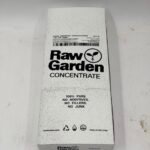
The RAW GARDEN 1G LIVE RESIN PUCK can be understood as a one-gram, puck-style cannabis concentrate associated with fresh-frozen cannabis extraction practices. crystal rechargeable vape, cola ice crystal bar, blue razz lost mary
Its characteristics are shaped by the source material, preservation process, extraction methods, cannabinoid composition, terpene profile, packaging, and storage conditions.
Most importantly, precise claims should be based on current, verifiable documentation. Product names can communicate format and category, but laboratory records are required when specific analytical information is being presented. elfbar pro, british tobacco vape liquid, xros 5 nano
For an accurate and transparent product page, the package label, batch identification, applicable Certificate of Analysis, and local regulatory requirements should therefore be treated as primary references.
By emphasizing verified specifications and responsible information, readers can gain a clearer understanding of what the RAW GARDEN 1G LIVE RESIN PUCK represents without relying on unsupported potency, quality, or effect claims.
Be the first to review “RAW GARDEN 1G LIVE RESIN PUCK”
Related products

Reviews
There are no reviews yet.